Tag: writing

  • Buda and Pest

    (Written for publication in The New Collective for Inquiring Journalists)

    The Democratic City of Budapest welcomes all refugees with hysteria and perpetual movement, as if both were one and the same or as if one needed the other as its lifeline. Boats full of visitors and eastward refugees come gliding into this old dual city on the mighty Danube which, if reports and old photographs are accurate, has been largely unaffected by the great quake and its years of aftermath. Vessels of all types and purposes move across the surface of the water, which appears to be relatively clear and pure, millions of people move harried about the assorted ports set up categorically at the city’s edges, and the city itself seems to move erratically and en masse with the news of Senator Mayberry’s election victory in Zurich. Already many citizens of this city have begun their self-pronounced “frantic exodus of shame” eastward to the open arms of the Democratic Port City of Bucharest where President Sobo has said he and the people of the port city “would welcome the Hungarian people with open arms, as brothers and comrades.”

    The city churns with refugees from Prague and the Republic of Vienna who, like the loyalists of Budapest, fear the delicate balance of European power has shifted into the hands of the west.

    Still thousands in the Democratic City of Budapest have rejoiced at the news of Mayberry’s victory, and thus, the apparent stranglehold in Europe now commanded by the POG. Supporters gather in front of the Országház parliament building each day waving blue and white Zurich flags or large banners stitched with the POG symbol while the Hungarian loyalists threaten across the street with flags and banners of their own. The city’s security police watch the conflict poised on horseback, fully armed, but no serious violence has yet been reported.

    Budapest’s President-elect Farkas has not addressed the people of his city publicly since the news was reported out of Zurich. He is thought to be preparing a statement with his closest aides inside the Országház, but his office has refused to comment on his current whereabouts. Farkas’ absence has worried many of the Hungarian loyalists and has appeared to strengthen the resolve of the POG supporters, who seem to double in volume everyday.

    The tension in the city is as real as the clamor, but the weather is pristine. As sunset darkens the sky behind the Országház with hues of orange and purple and red, a frayed tri-colored Hungarian flag whips about from a third-story apartment window.

  • It wasn’t written

    Redhead

    Because what happens to all the things that never get written down? What happens to all the notebooks and pamphlets that sit empty forever, throughout the span of this world and the next, what happens to the people who never get photographed, their stories untold? What happens to the undocumented percentage of our lives, the moments and memories that go unrecorded? I’ll tell you what happens to it all: It doesn’t exist. If we don’t exist in history, as a name in a notebook, as a face in a photo, as a voice on a digital recording, we don’t exist at all. How could we? There is no evidence of our walks through rainy downtown streets at dusk, no evidence of the love we feel even when we shouldn’t, no lasting record our labyrinthine dreams, no evidence of our battles, our scars, the relationships we’ve built with emotion and skin and courage. The present is only a condition of the future, Jennifer. I need to write everything down because I don’t know who I am. Whoever I am, whoever this person is writing in his notebook, I want to live on, I want my experience to have meaning, I want to be remembered, if only to one person, I want to prove that I exist or once existed. I want my life to have a defined purpose, and I want to fill that purpose with significance. It doesn’t matter how long it takes, how many notebooks I fill, whether you’re reading them or not. Nothing matters anymore at all because someone will read this notebook someday or maybe one of the others I’ve habitually filled with words and sent off to a childhood friend that either moved away or died years ago.

  • Man with a package

    wpid-IMAG0167-1-1.jpg

    The day was gray and overcast. I had to deliver a small parcel in a neighborhood on the north side of Edmonton when I heard the nearby shots. The neighborhood had recently become a locus of gang activity and I knew it, pedaling through reluctantly, but it was particularly quiet that day until I heard the shots. I immediately plunged the bicycle into some roadside brush, scratching myself up and landing awkwardly on my right side. My memory becomes a bit vague after I fell off the bike but I remember that the package had been opened by the security police and then re-sealed before I came into possession of it. I don’t remember the name of the recipient of the package but I remember it was a woman who had begun teaching at the new college there in Edmonton, an intellectual with supposed subversive leanings, a focus of the local security police. I craned my head over the brush to see where the shots may have come from and there was a man near me dressed in all black. He even had a black mask covering his face. The man jumped out from behind a parked sedan with a silver pistol in each hand. He fired three or four rounds down toward the other end of the street and then he darted back behind the sedan. I tried to see who he was firing at and what sounded like rifle fire was returned to the man behind the sedan, tearing a chunk from the vehicle’s passenger side.

    I thought I might be able to crawl out of the bushes and get my bicycle and ride out of there. I thought that maybe they would recognize my navy blue uniform and let me go, let me ride peacefully out of there, how stupid of me, and just as I got the bike upright with a leg astride it a bullet sung past my neck and then another ricocheted off something behind me and buried itself into my shoulder, knocking me off the bike. I felt like I’d been punched by an ape. I felt another shot explode into the ground near me and I remember thinking that whoever shot me must have thought my uniform was black like the gunman’s. The pain welled up inside and right before I passed out my eyes focused on the parcel and the name printed on the label and I realized I’d been delivering it to the wrong address.

  • Balance and imbalance

    mcd_hugoThey said that with an intellect advanced far beyond one’s years there will always accompany it a cognitive malady or other neurosis equally advanced, because the universe must always find a way to balance its extremes. And the boy’s gifts were indeed extreme. This is how he came to suffer adult phenomena at a very low level of maturity, due to this balance, or imbalance, if you will. He was so sick that he couldn’t translate his fears and feelings into language in order to articulate them to others. They said that because of this, the boy suffered through a debilitating anxiety throughout his childhood and adolescence while the few people who bore witness to his gifts had no idea of the struggle inside him, the strain and terror gnawing at his spirit.

    And it was due to this complicated element in his life that the boy, or the prodigy child, as they called him, grew into the world as well as into himself with a very gentle disposition but also a deep contempt of the world that would accompany him unto his death.

  • Atman

    libraI

    We fight furiously to deny the circumstances and events that scar us, if only to ourselves, as if our scars didn’t disfigure us but instead represent what has disfigured us.

  • Streets of Manhattan

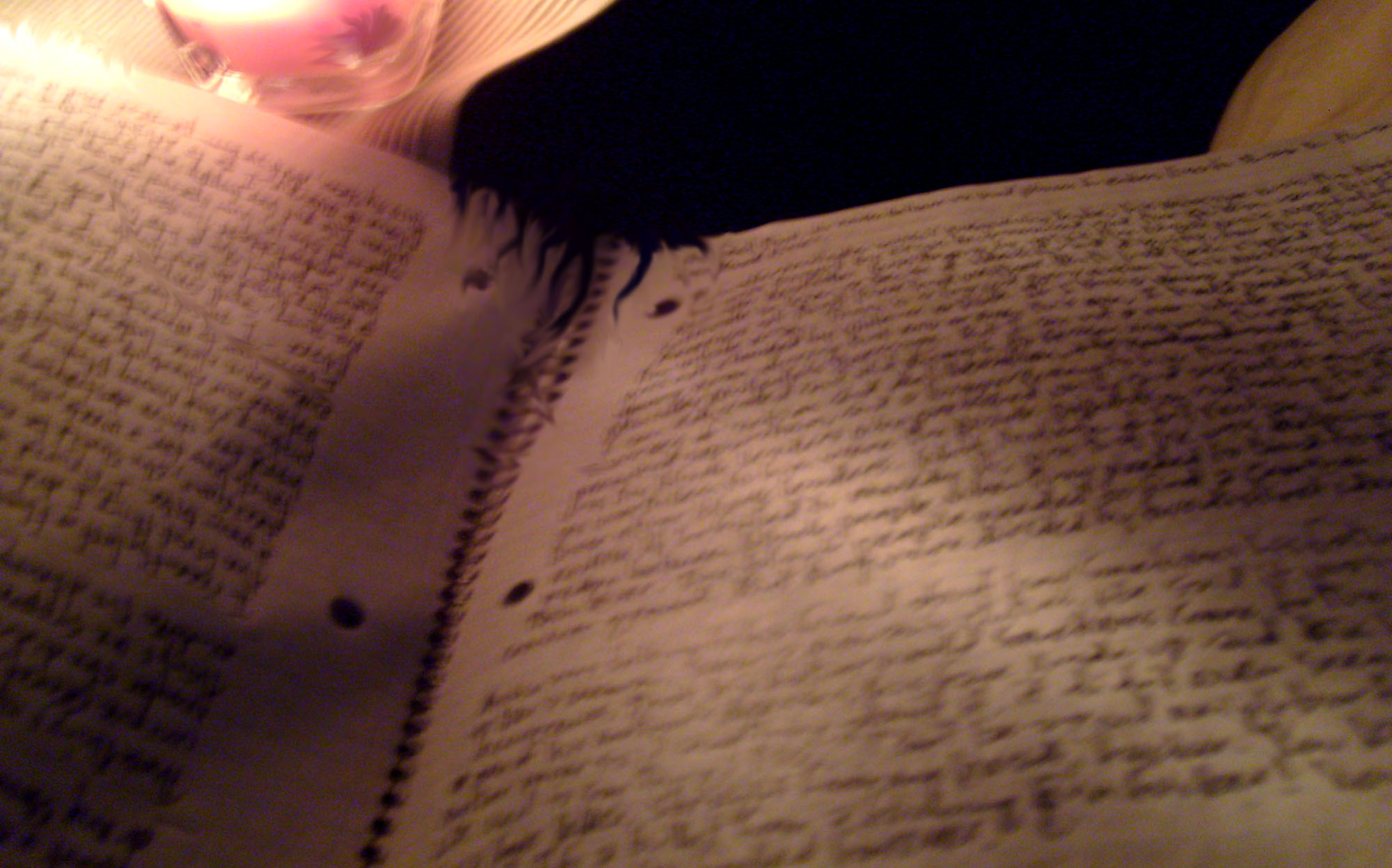
    I long for the cold streets of Manhattan. If only temporarily. I walk those streets and feel the city pulse through my feet, music at my ears beckoning entrance, something hard, as hard as the city itself. Steam and screeching brakes. Being where I belong and don’t belong at the same time. Pizza and jazz, fireside chats with bourbon, shredded door mats and cold eyes flashing, people walking briskly, so many people. Truck doors slamming shut, steam shot out in front of faces. Knit hats and deliverymen wearing gloves. The smell of coffee and baked bread, the smell of vehicle exhaust, fragrant with doom. Book shops and restaurants teeming. The familiar Manhattan scent of shit, somewhere nearby there’s shit, gray sky and air replete with cold moisture. Concrete and asphalt dreams. Brad Mehldau maybe, I walk past a shop and see people sitting inside by candlelight, laughing, holding mugs. People inside eating and talking about Socrates and how he fucked the world. The birth of tragedy. Cars stacked atop each other in garages, filled cages of cars and men in coats attending them. Violence in my ears, the city is violence incarnate, jutting glass and steel, phallic and arrogant. Men and women walking dogs or it’s the other way around. Old women leaning and plodding toward some unknown destination. Where do old women go? People across the street yelling, I can hear them through the music, young black man gesticulating. The park frozen over but still children bound bundled and padded down. John Coltrane is angry. The lower west side hums with a past I cannot see but is nevertheless there, ghouls in crossing. It is never dawn here, never dusk. Only light and darkness. Street signals flash red then yellow, then maybe green. Hold my hand, baby. Look both ways. Don’t ignore the man in the wheelchair, his cup extended out toward you. We have nothing, sir, we also have nothing, a different type of nothing, bless you. Freighters in the water carrying ungodly weight less than half a mile away. Imagine all lady liberty sees, bearing witness in stone silence. You could live here, they say, you could live here, too. Give up everything but your anger. In fact, Dave Douglas and the cornet speak, in fact, take your anger and sharpen it down to a needle-point. Hate the city and thereby love it. Hate the people, move past and through them at all costs. The subway is your friend and nemesis, screeching intolerably, this is where artists live, this is where killers live, rats too. Black men and old white women, Portuguese cooks and Korean shop owners, lucky charms of yesterday crushed, pounded into the pavement. The smell of piss, ex-con bar owners with shifty eyes talkin bout the Giants, fuck em, I’m done, thirty years I been a fan but I’m done. Pizza and jazz. Young people in second-floor taverns working three jobs to pay the rent, a cell of their own choosing, a haunted closet of paradise. Can I get you something, they say, a question that tapers off and descends so it’s not a question at all but a challenge. Yeah, a bourbon, Brubeck says, sitting at the window and watching em walk through the east village with a purpose lost to me, carry your weight,
  • Journalist scum

    Borges1

    I don’t remember what you look like, he whispered to himself, nor do I remember the color of your eyes or the narcotic scent of your scalp but I do remember you speaking to me and your voice like carved from some small talisman made of pearl and time. He thought of her while in the cell surrounded by darkness and the harried breaths of the other men and he thought of many other things and then things that weren’t things at all. His thoughts helped him endure the rhythmic crash of dripping water in those vast stone chambers and he dreamed of her in the runaway void of his mind and sometimes when he woke her breath was on his tongue and her eyes, not the shape nor the color but the essence, the spirit, the story behind her eyes, was somehow burned cold into his mind. He would whisper her name and his voice was life incarnate and the guards would shout at him with the other detainees shifting in their rags upon the dried pools of their own filth before retreating back into their own stone dreams, and he could see pairs of eyes flashing at him from dark corners across the cell and he could hear the beating hearts of the starved, of the lonely and mad — mad with loneliness. The darkness was nearly total, is if he were approaching blindness. Every so often the sound of men screaming agonies through the chambers and down the hall or around the corner, he knew not which, for direction was time and both were lost, and the prisoners in the shared cell closed their eyes to those terrible sounds or otherwise peered through the darkness to meet and hold another’s gaze in a tacit bond of principle or shame. Men thinking about their wives or lovers or their children either juvenile and still novel or fully grown and autonomous, or men thinking about their former lives as journalists and the destined chain of events that brought them to these catacombs. Men with fire in their eyes smothered more by each minute but men married to principle and stubborn and unwilling to cede to the intimidation around them. And he sometimes thought he heard the songs of birds beyond those cell walls, peculiar in pitch and nothing like he’d ever heard before, as if the prison or bunker or dungeon or whatever it was had been visited by a strange or foreign migration of flying creatures from faraway, possibly other continents or worlds, or maybe he’d never heard the calls of birds before, he thought, the language so lovely but oddly coarse and incomprehensible and perfect in some unintelligible way, a microscopic view into the fragments of his dreams, and every day one of the prisoners would mutter in his sleep or try to speak to another prisoner and the guards would thunder upon the cell walls with their rifles or their hammers or their books of lies and shout at the captives to be quiet, shut up or we’ll kill you all, they said, journalist scum, and sometimes a guard or guards would walk into the cell the man shared with the others, the number of prisoners perhaps five or six but as many as twelve or even twenty, and the prisoners would awaken to the footsteps of the guards inches from their faces and the guards were there with rifles slung about their shoulder or sidearms clutched at the ready and they were tall and looked something like him but they were more like shadows of guards or the ghosts of guards there in the darkness rather than real armed men. They would not speak but abruptly drag one of the prisoners away seemingly at random and the prisoner would weep quietly as they carried him off, the scent of his shit and piss suffocating the man lying next to him pretending to sleep, and sometimes the prisoners came back to the cell quiet and subdued and walking with a limp but sometimes the prisoners never came back. The man would awaken sharply and bitterly from some pained dream he could not remember and he could hardly breathe for the intensity of his hunger. He still believed in love after all this time without food and he held steadfast to the claim that men were moral agents before they were social creatures and he knew his decisions were just despite the onset of madness and disease and the temptations therein curtailing him, toxifying his thoughts. He occupied himself by stretching his bony finger out to the stone ground and making shapes of words in the dirt and grime. He wrote messages in the dust, letters to his dead mother, lists of self-reassurance. He wrote to all forms of the self, the free self and the imprisoned self, the starved self and sated self, the clothed self of wealth and the naked destitute self, and the messages were different in tone and shape depending on which self he addressed, but with each note or letter or message or transmission he saw himself there on the ground scribbled alight in his own shit. He described his dreams in symbol and picture and he knew at that moment that the power of language was beyond reproach, even from god. Then he wondered what it would be like to be blind for good, his eyes shorn or plucked from his head by the guards just as they set him free to wander the world. He imagined he would learn Braille and read continuously, and he wondered how it would feel to be blind, reading in the darkness. What it must be like to feel the words as you read them, he thought. What it would be like to touch your way through a story. Reading would become a physical experience, even more intimate than reading with the eyes. Imagine what it would be like to have a favorite word to touch. The guards fed them each a biscuit and a paper cup full of water each day. The man always woke to the smell of his biscuit somewhere near his face, and he’d sit up and eat the biscuit in two large bites. Sometimes after he ate he knelt with his eyes closed and his hands outstretched to the fetid air and on his face his tears were dried and renewed again to his cause. For what does it mean to cry in this place, and is there ever any deliverance for our tears when we cry them in solitude? He thought about his life before prison, the newsrooms, the road, the chain of days like questions upon his lips, colleagues and subjects, loves and lives passed, and his heart was fortified by his memories, strengthened by his woe. He dropped his hands to his sides and stretched out again there upon the muck in the room with no dimension and he slept. He dreamed of long meandering rivers flowing up mountains, frothing white and replete with life and in each river he saw his reflection pure and shimmering and distorted only by the sparkling ruse of the sun. To be blind and reading in the darkness, he thought, embracing the words, feeling his way through a story. Imagine how abrasive some words must feel. Imagine what it would feel like to reach out and touch my favorite characters, those select souls I’ve seen so much of myself in. It would be like feeling my own reflection. To be blind and reading in the darkness, repeating words and phrases, feeling over them again and again, the rote tactile experience of living through great things. Living through great things. To be blind and reading in the darkness, rain pounding the attic roof, smell of fecund earth creeping through the open window, breath of crickets and worms out in the fire shower of their universe, flashes of lighting opening up the broad mysterious horizon. You scan the pages rapidly, your hands trained and possessed upon the text open and virginal before you, and there is no wind, for the wind’s nature is to unsettle and there is no light save for the flashing sky. This would be something like tranquility, he thought. Or to be blind and huddled beneath the ground in the city sewers and reading with the sounds of running water and the visceral rumblings of humanity above and the scent of rot and plague, the lick of death upon your cheek. To hear the echo of your heart beating there in the tunnels, tunnels just like these, the dream vocabulary of the miniature, and there is storm and malevolence above but down below you’re impenetrable, deciphering treasures. Nothing matters but the story and you emerge upward back into the world once the story is finished. Hatched back into the center of madness like some ripened fetus, more enlightened and shrewd than before your submersion. And somehow the air tastes different than you remember it. The people all talk and sound the same as before but you learn to see them differently in your mind. You imagine they’re more aware of you in their own movements, their furtive glances. They wonder how a blind person could see so much. A guard enters the cell, Where is the Yankee, he says. There is an American here, where is he. There are two Americans here, says one of the prisoners. No, says the guard, there were two but one of them is dead. The man sits up and studies the blurry silhouette of the guard. Right here, he says, and stands. His body shudders with exhaustion. Come with me, says the guard, You’re going home. I’m not going anywhere, the man says, Unless we all go. You’re coming with me or everyone in here dies, says the guard. The man looks into the dark corners of the cell to the eyes peering back at him and he nods to each of them and all of them and then he follows the guard out of the cell into a long stone corridor lit by sunlight at the far end. Hold it, says the guard, and another soldier appears and ties a blindfold about the man’s filthy head and they all three walk toward the light and into the chaotic embrace of Earth’s resplendent lithosphere.

  • Crepuscule with myself [revisited]

    libraI

    With a sky like creamed fire hewn by low smoky clouds the man appeared at the corner and I marched toward him with my head down, his body an approaching shadow against the brick façade in that electric dusk. My eyes stuck at my hip rather than in my head, the perspective askew in a diagonal upward awareness dreamlike and dizzied as we merged, the man and me, I could feel the energy of his menace and see the faded red and white checked pattern of his shirt, cotton, dank, ragged. In that sallow crepuscule of summer, the air was warm and dry and charged with anonymous violence wrought from the gods solely to entertain themselves with the malleable human experience.

    The sounds of our shoes clapping concrete swift and strident like the echo of my heart in the luminous hum and from his left hand a flash of light born of an odd fluid motion and the blade whistling past and then dissolving back into his pocket as quickly as it had emerged. He walked past and turned the corner and was gone to the cool trickle of blood on my arm and in his wake the scent of atrocity and other like bouquets. With each remaining step toward the waning light waxen and pure I plodded a course of total loneliness with the laughter of the mad and a broadening crimson trail behind me, and I had never felt more alone nor further from home.

    Waking breathless from the dream in the twilight of the unknown I felt the wound on my arm closed up to that strange indirect realm and I confused the sweat on my body with the sweet tackiness of blood. Shapes of a more familiar world materialized from the shadows.