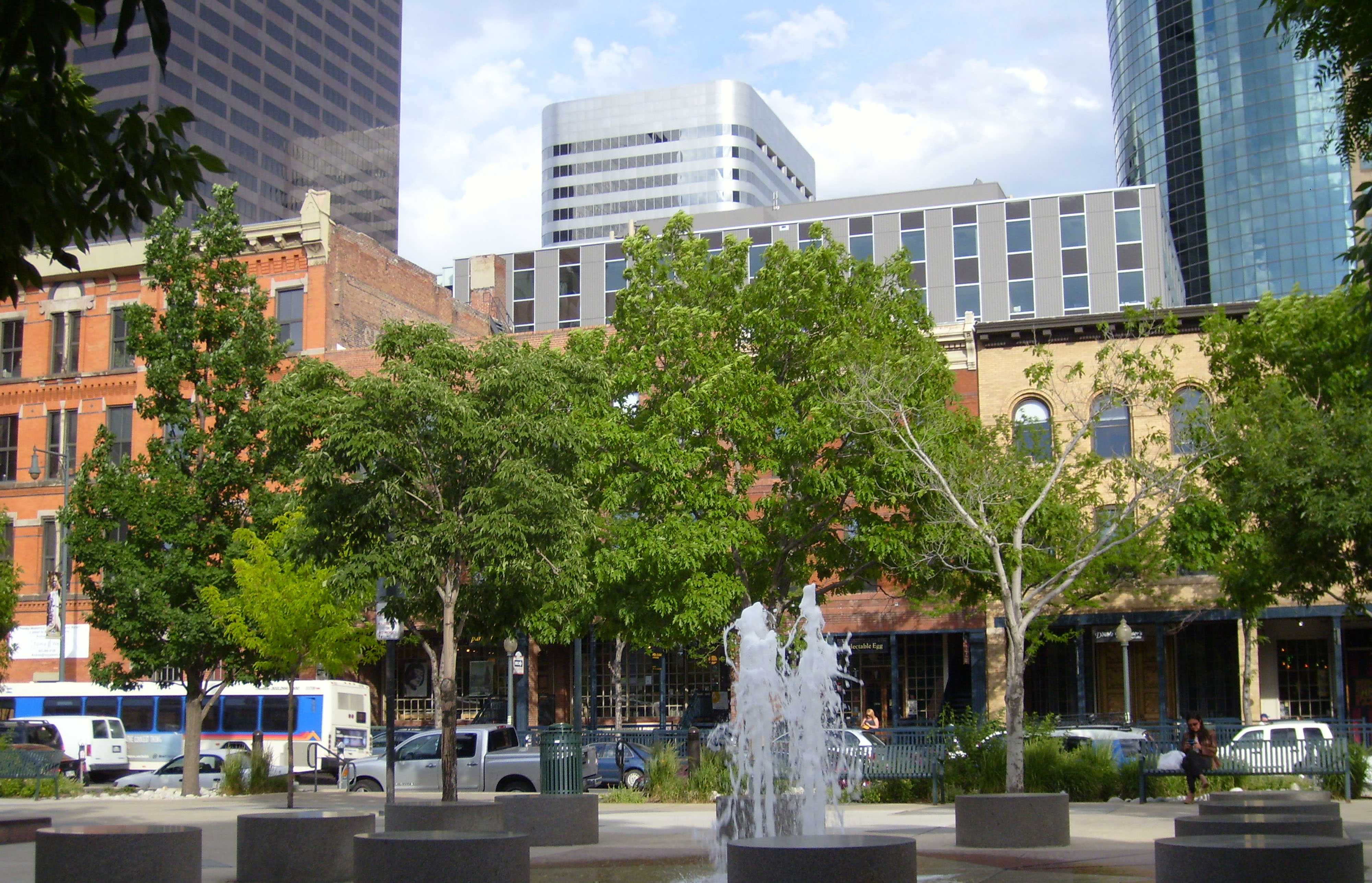
When I left the library rolling skies befell the world and rain boiled downward from molten clouds sending pedestrians and anyone not under cover of shelter skittering into shadows beneath dripping awnings or back into campus buildings to avoid the onslaught of water and hail the size of human eyes hard as rock and jaggedly imperfect. I made it to the car gasping and wild in the eye with the books stuffed up into my jacket to keep them dry or as dry as possible with water pounding the roof of the car and sliding down the windows in cascades of prismatic light and sound. A strange sense of isolation and security overcame me and it was warm in the car, the windows began fogging almost immediately from the moisture in my clothes, in my hair. I sat there a long time listening to the rain reclined in my seat, eyes closed, trying to immerse myself into the water, trying to imagine myself in each ounce, in each drop of water and ice from the sky and the storm would surge and then taper off, surge and taper off, rhythmic serenity, a paroxysm of peacefulness. I could die right now, I thought, even though it was the first time all day I hadn’t yearned to die. The rain slowed and eventually stopped and again I felt part of the world, less secure, exposed afresh to the discrimination of energies and of the minds of all the people of the world and I started the car and pulled into traffic.
Tag: prose
-
New memory in algorithm
His laugh transformed his face. I remember his hands and how strong they were. We’d play catch when I was just a kid and he’d launch the baseball at me as hard as he could. If I showed any sign of fear he’d yell at me or quit and walk away, leaving me standing alone in the street.
I often thought about stabbing him while he was asleep. Even as a four-year-old, I thought it inevitable that my father would kill me, that I’d die violently and his face would be the last I’d see. I grew resigned to the idea and waited.
He bought us tickets to minor league baseball games when I was a kid. We’d go and eat stadium dogs and now and then a foul ball would come our way. Those were the best memories I have of spending time with him, even though I was still afraid. Years later, I got us tickets to a baseball game for his 49th birthday and it was a disaster. He was terribly ill and no longer had strength enough to climb or descend the stadium steps. He didn’t enjoy himself and we left early.
The year before he died he chain-smoked Marlboro Lights. Sometimes I’d sneak down and steal one, ripping the filter off before smoking it. There was never any booze or even beer in his house. He used to listen to Steely Dan and I didn’t appreciate the music until I got older, long after he was gone. It’s a shame we could never really talk about music together, we never got a chance to share our indebtedness to the music we loved.
He only talked about death twice, the first when I asked why he always seemed so depressed. I’d just turned eighteen and graduated high school. I’m dying, he said. Days later he told me to leave, that he wanted to spend time alone with his wife before he died.
-
An Excerpt from the Enlightenment Project [revisited]
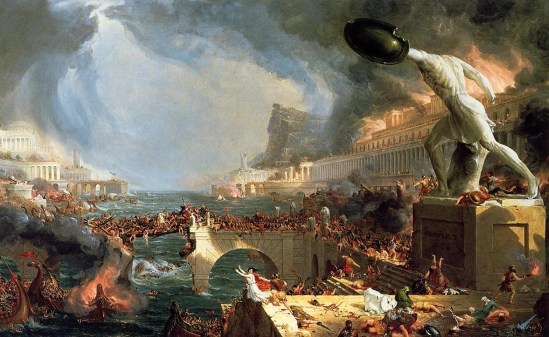
I imagine I’m a slave in ancient Rome during the early reign of Octavian. I’m approaching middle age but in fine shape, and my meager education allows me to work as an accountant for a quite reasonable and beneficent consul. I do not know any other life or situation, for I was born into servility and have demonstrated strength and aptitude in my duties. The respect I display and the ethic with which I perform my work has awarded me a sense of freedom and respect from my master and in my community. The Republic is in disarray with the separation of Antony to the Egyptians and the whore Cleopatra. The consuls and the local population all fear the worst, that a total breakdown of the Republic is inevitable. Octavian has begun recruiting a vast naval army and I volunteer, resigning my work as a clerk in hopes of being completely freed after military service. For months I train as the tension tightens and war becomes more of a certainty.
I have no wife, no children, and no family in a world that makes little sense to me. The machinations of man seem to govern all rules of the Earth, for we have truly become rulers of the land. There are no gods and the Republic is full of imbeciles who have nothing better to do than believe in mystic flattery. We are the true gods; the world is a hostile place where men encourage this hostility through politics and war and the perpetuation of enslavement. If I die in Agrippa’s war at least I’ll finally be absolved of this systematic separation of those with privilege and those without. The world is a cruel and barbaric place and the Republic is an ornate façade. I have studied Cicero and believe that a man stripped of the ability to govern his own fate is a gross injustice. So I will fight for my own freedom and nothing more; I shall not grieve if the Republic perishes.
Most other slaves have it far worse than I. They toil and bleed and are murdered for no other reason than for the powerful to assert its control. I observe in silence, grateful for my luck, but am aware that it is luck and only luck that separates the diseased slave from me, only luck that separates the servile from the privileged. Is not man in his status as god the most cruel and unjust?
[painting by Thomas Cole]
-
Voices of the damned
I dreamed that I couldn’t do anything right. A recurring theme lately. I worked at a warehouse, lately I’ve been working at warehouses and I don’t know why, warehouses of anonymous and chaotic purpose, I’m up high in the warehouse either on the high shelves or floating up near the ceiling, helpless, I don’t know what it means if it means anything at all, I’m working at a warehouse and there are managers there, I fuck up every job they give me, the female manager is about my age and she’s not nice, not nice at all, she tells me to punch some holes in reams of paper but she doesn’t tell me her method, she doesn’t tell me that the warehouse has a fool-proof method to use and they have been using it for years, so she tells me to punch holes in some paper and walks away and I start punching holes in the paper and naturally it’s all wrong, I’m doing it wrong, the holes don’t match up, they’re uneven and obviously punched arbitrarily. I screw up the job in every aspect. The female manager returns and looks at the work I’ve done. You’re doing it all wrong, she tells me, maybe this isn’t the job for you, perhaps you’re not qualified to work here. Then she tells me to follow her, she might have something else for me to do in the warehouse, and I start following her but then I start floating, I start floating as I so often do in dreams, helpless, I float up to the warehouse ceiling and it’s difficult to move in any direction, I can’t build any momentum and soon I’m floating up and away from everyone, I float myself into another area of the warehouse where no one works, it’s a secret area with motion sensor alarms and naturally I begin to set off those alarms, adding to my discomfort and the sad state of my employment in the warehouse, embarrassed, and I want more than anything to settle back down to terra firma and continue working without any attention focused my way. This worsens my situation as management can’t find me and I try to hide, an action that only sets off more motion sensors, a terrible predicament, and then finally I descend slowly back to the ground and reenter the main area of the warehouse, I’m greeted by a different member of management, a young man with blonde hair who says, We’ve been looking for you, I might have another job for you if you can manage, if you can actually perform it without screwing it up, and I follow the young prick to some type of sheet metal press and conveyor and on the way there I see Bob Costas at a paper hole puncher, bent over a huge stack of papers and Costas says, Hey, come here. I walk over there and he says, Let me show you how to do this the right way, even an imbecile can do this. Then he proceeds to show me what an imbecile I am, so I thank him and follow the prick manager to the sheet metal press, he tells me to cut the sheet metal in even strips, but then he walks away without telling me how or what size strips, and soon the conveyor starts sending large slices of sheet metal my way and I’m immediately overtaken by the material coming at me on the conveyor and there’s a great crash and whir and catastrophe from the press and the male manager runs over to me and slaps the emergency shut-off button. I’m incredibly embarrassed, obviously, and all the people, all the workers in the warehouse watch me, the place is silent in the wake of the alarms and the blaring madness of the breakdown, and the female manager is there now with the prick manager, and he says, I don’t think this is the right job for you, and the female manager says, I don’t think we have a job in this warehouse that’s right for you, and they walk away from me, I’m embarrassed, but I decide to take a break from the station I’m at and I walk away, I want to go outside, I want to get away from all the managers and workers and motion sensors and I want to give up but I need the job, I don’t understand why I’m failing at the job, I don’t fail at anything, but surely I’m failing at this job, it’s a goddamned shame, really. I find myself trying to find the outside break area or whatever but I’m back in an empty spot in the warehouse, floating, floating yet again, and the dream repeats itself like this two or three more times, I don’t know what the fuck is happening, usually by this time I wake from the dream, I stir, I shift positions in the bed, which wakes me and reminds me that I’m dreaming, it’s all just a dream, a magnificent ruse, I shouldn’t feel so ashamed and upset, it’s all just a dream and I don’t float, I don’t try in vain to swim through the air, it’s all just a dream, but no, I was locked into it without escape, and as I floated back down to the surface of the warehouse for the final time I tried to bypass the motion sensors so as not to draw attention to myself and there was a dark office set off to the side or the corner, rather, of the warehouse and I guided myself toward that office, the shadow and emptiness, but rather than help my situation, I made it worse, of course, the office turned out to be the room where all the company’s confidential materials were held, I set off yet more motion sensors, and when I emerged from the dark office all the managers stood there watching me. It was excruciating, I was so embarrassed, I couldn’t believe it, and the managers were on the verge of just telling me to leave, just leave our warehouse, you’re worthless and you’re screwing up every job, you’re destroying our machines and materials, you can’t do anything right, they say. And of course I know they’re right, it’s true, I can’t do anything right in this warehouse, just look at my record, you gave me two jobs to do and I’ve failed at both, plus I’ve set off the motion sensors, I’m worthless, you’re right, but then the dream shifted, perhaps I did stir in my sleep, unconsciously, what I mean is that in the dream I wasn’t aware of any type of any consciousness infiltrating the dream, the dream was still self-evident as a dream, but I was a different person, I had a different identity, it was strange, everything that had happened to me in the dream had still happened but I was different, it happened to me but it had happened to the different me, a young Jewish man, perhaps twenty, the son of the warehouse owner, the company owner, and I was still a failure but I was a different person with a different character, and as this young Jewish man I harbored a deep turbulent revenge for the way the managers and the other workers made me feel, I hated them for making me feel like a failure, because as the inheritor of the company and a rich person, I’ve spent my whole life with my parents telling me I am not a failure despite what everyone says, I’m no failure, my parents ingrained this in my head, no matter how often I fail, I am no failure, but I’ve transformed that ideal of positive reaction into some militant type of hatred against the managers and the workers and everyone in the world, actually, the hatred and the violence consumed the person I might have been, and I see myself as this other person in the warehouse, protected, as it were, by the ownership status of my mother or father or both, and the managers know that I can’t do anything right and yet they permit me to linger about the warehouse, which I do quite successfully, I linger around the place watching the progress of the work and think about how I’m going to destroy them and everyone I know and the world as well, I prefer to hang out on the top shelves of the inventory placed up high near the ceiling where I once floated, but I float no longer, as I am a different person, I am a jew who does not float, but soon I remember my plan, I find myself telling everyone in the warehouse, management and workers all, perhaps two hundred people, that I am leaving early, yes, my plan, I must go join my father and mother or father or mother or both, I have work to complete, I am a busy young man, inheritor of a company, I have something to do (which I do, of course, in secret), and I leave beneath one of the massive overhead doors to the surrounding industrial area beneath a pale sun, I have work to do, and I travel about a quarter of a mile away to a neighboring lot and I extract the mobile phone from my pocket and press a button and watch the warehouse of my dreams explode, one second later feeling the shockwaves of the explosion on my skin and hearing the voices of the damned in my ears.
-
Silhouette
Walking through the streets, I thought. When I wanted to write about something, maybe I was stuck in a creative block, I was thinking too acutely or not acutely enough, I would always imagine someone walking through the streets. Downtown, at night. Someone alone, a man wearing a hat, a dark hat with a wide brim and dark coat, his hands thrust deep into his pockets, shoulders hunched. Because he’s cold, that man. He’s cold, living in perpetual winter, and in this man’s mind is a tempest of grave designs, and he walks swiftly, with a dignified purpose. It’s an unfamiliar city, where the man walks. The streets are all strange to him and yet he knows where he’s going, it’s as if he’s equipped with a detailed map or maybe a wireless receiver or other phonetic device nestled in his ear, a voice on the other end guiding him through the streets with names like glyphs etched into steel signs or else there are no names at all, avenues and boulevards empty and desolate save for heaps of trash piled up in their dark alleyways. Yes, walking through the streets, this is what I thought, these four words, as if their sequence were significant or as if my own history was sketched somewhere therein. But then again my own story is irrelevant, worthless, for I know as well as anyone (better than most) that the value of a tale always lies in the tale itself, never he who tells it. The story has always existed and will always exist regardless of who happens to translate it into language, it lives eternal upon a current of energy or thought (selfsame) and only requires someone to intercept it, some poor, afflicted, receptive soul to translate and enumerate it, to unleash it from its shackles deep in the cavern wherein it stews and stews.
Walking through the streets this man has his hands in his pockets to protect them but also to cradle something else, something buried in there, something like papers crumpled in his sweaty palms, because despite the cold blowing in from Lake Michigan or the Hudson or the North Sea or wherever our man happens to be, his palms sweat, which tells us, the writer and the reader, that he is either a nervous man or he is nervous at this particular moment. Or, of course, it could be none of the above. Perhaps his palms are not sweating at all and it’s not crumpled papers buried in his pocket but some sort of charm, a lucky coin, a religious talisman.
And then beneath a streetlamp our man’s erect figure is ablaze, lit up for the world to see, or perhaps lit up just for us, perched here on this building ledge (or studying him from an apartment window), awake, aware, watching as our man (or his outline) exudes a plume of steam (or smoke) from his mouth and then continues his easy stride through the light spectrum and then out of it, drenched in shadow yet again, with us still watching, and as we see him we cannot be completely certain that the figure we saw in the glow was indeed a man and not, say, a woman, or just as plausible, an apparition, for just as quickly as he had appeared beneath that bone white glow he has moved out from under it, walking through the streets alone, our only evidence of having seen him the image burned residually into our brains and the clicking of his shoe soles on the concrete.
-
The baby eaters
Back at the circle of storytellers, an old woman tells the group: They were married very young and had a house built in the heart of the city. They felt it necessary to construct a concrete wall around their house to keep out the felons, the transients, the cannibalistic businesspeople. The couple felt alone in the world and the city and so they chose to transform their feelings of loneliness into a veritable reality. They had no family or friends; only each other. Nobody ever saw them. People in the city just assumed the couple was in there, aging behind the walls. Their strange behavior began to garner rumors which soon metamorphosed into legend. It was purported that they were getting very old, or that one of them had died and was still inside the house, rotting and decayed, and it was also rumored that the couple had a child long ago, by accident. The tale goes that one rainy night many years ago the woman gave birth in the bathtub and the couple, as terrified of the outside world as they were, couldn’t bear to allow such a sweet and lovely and innocent creature out into the maw of horror and so they killed it and ate it. It was a rumor, of course, because no one had ever walked through the gate in the wall and asked the couple if it was true, did they really kill their child and eat it like people say. So the house behind the concrete walls soon became the locus of community legend, it became an integral fragment in the vernacular, the baby eaters and the baby-eater house was mentioned weekly, perhaps daily in the city and the surrounding communities, it grew to hold a temporal and spatial point of reference regarding the identity of the people born and raised in the city, generations of families who had grown up with the specter of the baby eaters haunting them from behind the walls. It became a rite of passage for all teenagers in the city that one night, amid drunken clamor and bravado, bets would be made and solidarity would reign supreme and the young men and women would decide to scale the concrete wall to become more intimate with the baby-eater house, which was symbolic of their departure from childhood and arrival into the adult realm, for their entire young lives the baby-eater house was one of the city’s most consistently frightening features. The scaling of the wall would wipe the slate clean, as they say, of everything they had ever known and said, in terms of legend, identity, what was real and what was make-believe, all of their fears and questions confronted in one great leap. When they finally scaled that wall in the middle of the night, one or two of them boosting up the bravest or most reckless of souls to traverse the fold himself, for it was usually a young man driven solely by the desire to impress the others, what he found was a very old and abandoned house, windows cracked and broken and weeds sprouting up through the floorboards, the furniture inside rotted and caked with dust, a home, truth be told, so abandoned that not even the city’s stray animals lived there. The young man alone on the other side of the wall, wracked at once with emotions in myriad learns and understands many things in those few seconds, before re-scaling the wall and returning to the other side. He understands things he hadn’t before, about life, about assumption and discovery, about the power of secrets and legends, about himself, and he knows that nothing will ever be the same for him again, there will always be something separating him from his friends, there will always be deep within him something no one from that city or its surrounding communities will ever touch, will ever match, unless they too scale that wall and witness the baby-eater house or the so called baby-eater house for what it truly is. The young man holds a tremendous amount of power in that moment, for he realizes the future of the community is in his hands, so to speak. He can return to the other side and tell his friends whatever he wants, he can choose to keep the legend alive or destroy it in one fell swoop, and the choice is his and his alone.
-
Pedagogy
Ask yourself why you love literature, he said to the students in the room. Ask yourself why you’re devoted, what’s brought you here to this room.
He paced. The room was silent.
I love literature more than any other form of art because it is most often the tale of the Everyman, he said. It is language, yes. It is storytelling in its purest form, yes. I love it for these things. But most of all I love it because of the Everyman.
What do you mean by Everyman, a woman asked.
The Everyman, said the man in front of the room, is you. It is me. It is the ordinary man or woman who lives in extraordinary times. Just like us. The Everyman is the character in the work, moving through it, making decisions, performing routine tasks, assigning obligations to him or herself. But the Everyman is also the composer of the work. Man must have firsthand knowledge of the Everyman in order to narrate him. The Everyman is also the translator of the work. Man must speak the language of the Everyman in order to translate him. The Everyman is also the great liberator of the work. Man must have a notion of the Everyman’s captivity in order to free him.
The room was silent. The students watched the man pace slowly in front of them, back and forth.
-
Sculptor
For years I’ve toiled as a sculptor would, drafting by hand and chiseling away the stone to fashion my life into a work of art. Until the project is complete, the sculpture lacks shape and context and appears to be its very antithesis. The art appears to others, perhaps even those who know the sculptor most intimately, to be disorganized madness, ripe with error, a mess, a living joke. It is human to stumble. For when he is not sculpting, he drinks too much, he is easily distracted. But he finds solace in knowing that his mistakes are wrought of temporary moments of weakness rather than complacency, indifference, or obstinacy.Is it so uncommon for a man to will himself to become something more than himself? His enemies are numerous; they wish passively to destroy him, to fashion him into the antagonist of the common man.
*
Loneliness is crafty, it infiltrates the fortress of solitude, poisoning the seer’s sense. Zarathustra, lend me your wisdom and experience, provide me with the strength to bear the weight of my fellow men and women.