Tag: Non-fiction

  • Galeano on Marx

    A73E0F16-50BC-4C72-8548-D13060B9075A

    14 March : CAPITAL — In 1883 a crowd gathered for Karl Marx’s funeral in a London cemetery — a crowd of eleven, counting the undertaker.

    The most famous of his sayings became his epitaph: ‘The philosophers have only interpreted the world, in various ways; the point, however, is to change it.’

    The prophet of global change spent his life fleeing the police and his creditors.

    Regarding his masterwork, he said: ‘No one ever wrote so much about money while having so little.’ Capital will not even pay for the cigars I smoked while writing it.’


    From Children of the Days: A Calendar of Human History, trans. by Fried, Mark. Penguin Group, New York, 2013: 85.  
  • Tim Parks on consciousness

    Processed with VSCO with e8 preset

    If the mind is marooned in the head, pulling levers and pushing buttons (alone or in a team) to tell the body what to do — then our knowledge of the outside world will always be suspect. How can I know a world if I’m not part of it, if I’m stuck in Plato’s cave unable to experience the reality without, if I’m seeing colors where there are no colors, smelling smells when, as Galileo would have it, there are no smells?[1]

    1. The popular and orthodox view [of consciousness]: It is produced by your brain and exists exclusively in your head. This is supported by almost all neuroscientists and many philosophers. Most textbooks give this view as proved.
    2. The minority enactivist view: Consciousness arises from our active engagement with the world and requires both subject and object to happen so that conscious experience is extended through the body and into the environment. This view is supported by some philosophers and a few neuroscientists.
    3. The minority Spread Mind view: Experience is made possible by the meeting of the perceptive system and the world, but actually located at the object perceived, identical with it even; in short, experience is the same thing as the object.[2]

    The present orthodoxy is that there are black holes, but no smells. We are in the Platonic cave and need instruments of every kind to look at the higher reality outside, even though what we actually experience are only readings on instruments. We are trapped on one side of a Cartesian duality wondering what’s on the other, constructing a hypothetical ‘reality’ in figures, predictions and ideas.[3]

    While the brain may be ‘responsible’ for the pain we feel in other parts of the body, it is apparently immune to pain itself. You don’t feel a scalpel cutting into it.[4]

    Consciousness is all change, accumulation, dispersion, things that unexpectedly remain active, or repeat themselves, over years and years, a few words a teacher said at school, still very much in hearing range — things you thought had gone but suddenly come back — the smell of a certain red sauce they poured on ice cream in your infancy wafts by you fifty years later at a street corner [in a far different place] — and things you imaged would remain, must remain, they hurt so much or give so much pleasure, and yet are quite gone, or so it seems; in fact there must be many such things you don’t even know you’ve lost; you performed them once, then never again.[5]

    [1] Parks, Tim. Out of My Head: On the Trail of Consciousness, New York Review of Books, New York, 2018: 32.

    [2] Ibid, 129.

    [3] Ibid, 156.

    [4] Ibid, 207.

    [5] Ibid, 267.

  • notes from Fraser (2019)

    fright

    Determined to unshackle market forces from the heavy hand of the state and the millstone of ‘tax and spend,’ the classes that led the [pre-Trump progressive-neoliberal] bloc aimed to liberalize and globalize the capitalist economy. What that meant, in reality, was financialization: dismantling barriers to, and protections from, the free movement of capital; deregulating banking and ballooning predatory debt; deindustrializing; weakening unions; and spreading precarious, badly paid work. Popularly associated with Ronald Reagan but substantially implemented and consolidated by Bill Clinton, these policies hollowed out working-class and middle-class living standards while transferring wealth and value upward—chiefly to the one percent, of course, but also to the upper reaches of the professional-managerial classes.[1]

    This is the genesis of Occupy Wall Street that didn’t homogenize and died publicly humiliated on the streets of Everywhere, America. It was unorganized and nowhere near as thoughtful and ordered as those it tried to engage in conflict.

    To achieve hegemony, the emerging progressive-neoliberal bloc had to defeat two different rivals. First, it had to vanquish the…remnants of the New Deal coalition…in place of a historic bloc that had successfully united organized labor, immigrants, African Americans, the urban middle classes, and some factions of big industrial capital for several decades, they forged a new alliance of entrepreneurs, bankers, suburbanites, ‘symbolic workers,’ new social movements, Latinos, and youth…Campaigning for the Democratic presidential nomination in 1991-92, Bill Clinton won the day by talking the talk of diversity, multiculturalism, and women’s rights even while preparing to walk the walk of Goldman Sachs.[2]

    I was uneducated and witnessed my grandmother grandstand for the challenger, her photo printed on the front page of the local paper as an adoring fan holding a sign with teeth gleaming in the first few rows. Latina and Ute, she felt she finally had her pale-faced champion.

    Progressive neoliberalism also had to defeat a second competitor, with which it shared more than it let on. The antagonist in this case was reactionary neoliberalism…While claiming to foster small business and manufacturing, reactionary neoliberalism’s true economic project centered on bolstering finance, military production, and extractive energy, all to the principal benefit of the global one percent. What was supposed to render that palatable for the base it sought to assemble was an exclusionary vision of a just status order: ethnonational, anti-immigrant, and pro-Christian, if not overtly racist, patriarchal, and homophobic.[3]

    The mutation of the republican party from tea party and freedom caucus-influenced to co-option by Trumpism. Either get fired in humiliating fashion, adopt the disgusting and disrobing policies, or, if you’re lucky, get out by the skin of your back.

    The rust belt region, along with newer industrial centers in the South, took a major hit thanks to the triad of Bill Clinton’s policies: The North American Free Trade Agreement (NAFTA), the accession of China to the World Trade Organization, (justified, in part, as promoting democracy), and the repeal of the Glass-Steagall Act, which loosened regulations on banking. Together, those policies and their successors ravaged communities that had relied on manufacturing.[4]

    I like to think the thoughtful folks of my generation, if voter-aged, would have been so outraged by Glass-Steagall that the idea of its passage would have been constitutional and democratic sacrilege. But we had no idea. Sacrilege, as we found out, was wasted forethought. Democracy and constitution were words.

    An African American who spoke of ‘hope’ and ‘change’ ascended to the presidency [in 2008], vowing to transform not just policy but also the entire ‘mindset’ of American politics. Barack Obama might have seized the opportunity to mobilize mass support for a major shift away from neoliberalism, even in the face of congressional opposition. Instead, he entrusted the economy to the very Wall Street forces that had nearly wrecked it…Obama lavished enormous cash bailouts on banks that were ‘too big to fail’ but [he] failed to do anything remotely comparable for their victims: the 10 million Americans who lost their homes to foreclosure during the crisis…All told, the overwhelming thrust of his presidency was to maintain the progressive-neoliberal status quo, despite its declining popularity.[5]

    I worked two jobs seven days a week during this time, one of them for two years at a foreclosure law firm. I saw an average of 100 foreclosures cross my desk each day for one state alone for at least one of those years.

    President Trump’s policies have diverged altogether from candidate Trump’s campaign promises. Not only has his economic populism vanished, his scapegoating has grown ever more vicious. What his supporters voted for, in short, is not what they got.[6]

    I disagree. Each day another hundred supporters are won. Trumpism is a reaction just as the news cycle is a reaction. Each creates a dialogue of re-reaction in a culture of continuous faux-action. The real action is the reaction, and thus the philosophy is based on re-reaction.

    [1] Fraser, Nancy. The Old is Dying and the New Cannot be Born: From Progressive Neoliberalism to Trump and Beyond, Verso Books, London, 2019: 12.

    [2]Ibid, 15.

    [3]Ibid, 16.

    [4]Ibid, 17.

    [5]Ibid, 19-20.

    [6]Ibid, 26.
  • Bolaño’s literary kitchen

    BetweenParentheses

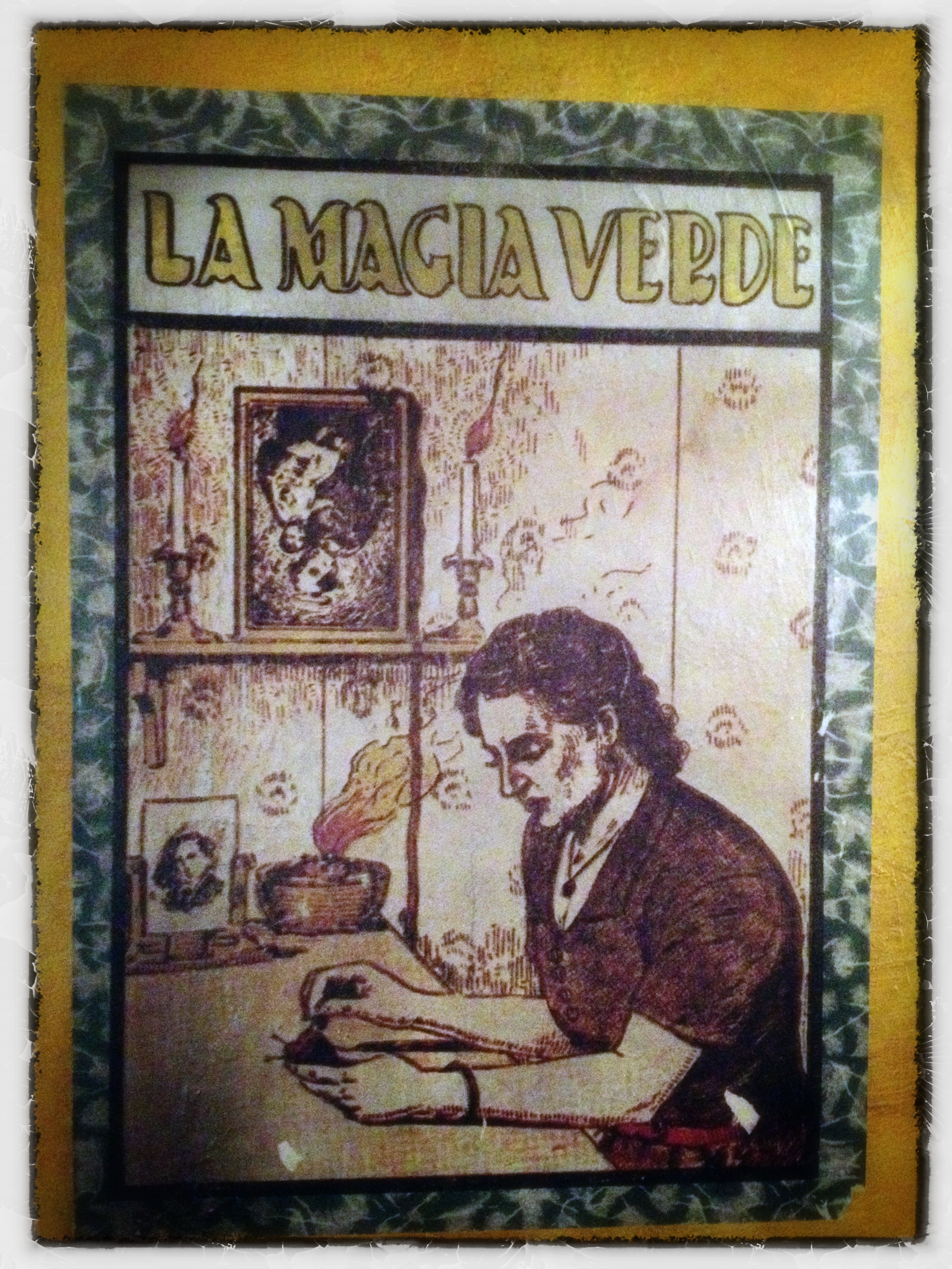
    “In my ideal literary kitchen there lives a warrior, whom some voices (disembodied voices, voices that cast no shadow) call a writer. This warrior is always fighting. He knows that in the end, no matter what he does, he’ll be defeated. But he still roams the literary kitchen, which is built of cement, and faces his opponent without begging for mercy or granting it.”

    — Roberto Bolaño

  • Churchill on landlords

    IMG_4060

    Roads are made, streets are made, services are improved, electric light turns night into day, water is brought from reservoirs a hundred miles off in the mountains — all the while the landlord sits still. Every one of those improvements is affected by the labor and cost of other people and the taxpayers. To not one of these improvements does the land monopolist contribute, and yet, by every one of them the value of his land is enhanced. He renders no service to the community, he contributes nothing to the general welfare, he contributes nothing to the process from which his own enrichment is derived…The unearned increment on the land is reaped by the land monopolist in exact proportion, not to the service, but to the disservice done.

    — Winston Churchill, 1909

  • At war with the blind

    Turns out the election of 2016 was a declaration of war. America is at war with itself and it’s not clear who is winning. We Americans didn’t recognize it for war at the time, but it’s clear now and clearer every day—with each childish act, each transgression by the populist president and the blind allegiance to him by those who turn the cheek to his lies, indecency, and hypocrisy. They’d rather not see the truth. It doesn’t conform to the reality they’ve invented.

    Instead, they make excuses. They claim that journalism is their enemy; and in a way, they are right. Journalism is a purveyor of news—news is the running narrative of the current state of the world. Most news organizations rely on facts and truth to inform the public, to check authority and keep it from running wild with abandon. But these people are not concerned with facts and truth. Perhaps they never were.

    They converse in small circles of their own, unable to communicate beyond their self-imposed borders. Their ideas are small; their speech hateful. To them, the mind is not a tool or weapon, but a liability. Their weapons of warfare: guns and faith in a god that would not recognize their warped idea of that god’s intended purpose or morality. Somewhere along the way, they decided their god had a white face and carried an assault rifle.

    The religious right got the president they think is a crusader for their religion. But he’s not—he’s lying about being a practicing Christian just as he lies about everything else. The Christians think they have god on their side. I am a reformed Christian, so I know their sad story well. It’s a story in which they have owned the last two thousand years. Yet history is not on their side.

    God and guns are their hallmarks, despite their lord and savior’s abhorrence to violence. If their Jesus were alive today they would not recognize him. They would ridicule him, persecute him, expel him, torture him, imprison him, murder him. Those on the Christian Right have deluded themselves. They look out at the world through veiled eyes and do everything possible to avoid seeing what’s really, truly there. They have the vision of a bat—their eyes do not work, and noise guides their focus. But whereas bats were cursed by nature with lack of eyesight, the blindness of the Christian Right is self-imposed.

    The two sides prepare for battle in opposite ways. I prepare by improving my eyesight—by reading the sages, by keeping myself informed through reliable, proven news sources (not commentary). Most importantly, I prepare by thinking. As a journalist, I feel the declaration of war more intimately or personally than most. This is a war on truth and decency. The president and his blind followers bring their guns, their anger, their certainty that they are right to the battlefield. Where I come from, only people who couldn’t fight carried guns.

    I bring the lessons of history and the sages who have lived through such battles and emerged victorious. Wisdom and open mindedness will always prevail against lies, intolerance, false patriotism, hypocrisy, violence, and indecency. I study the lessons of the past and sharpen my sword by lamplight every night. I urge you to do the same, and above all to participate in the civic discussion by spreading the truth you see all around you.

    —Your brother and rebel for truth.

  • Notes from Streeck

    “Capitalism has always been an improbable social formation, full of conflicts and contradictions, therefore permanently unstable and in flux, and highly conditional on historically contingent and precarious supportive as well as constraining events and institutions.”[1]

    “The tensions and contradictions within the capitalist political-economic configuration make for an ever-present possibility of structural breakdown and social crisis.”[2]

    “In fact, the history of modern capitalism can be written as a succession of crises that capitalism survived only at the price of deep transformations of its economic and social institutions, saving it from bankruptcy in unforeseeable and often unintended ways…The fact that capitalism has until now managed to outlive all predictions of its impending death need not mean that it will forever be able to do so; […] we cannot rule out the possibility that, next time, whatever cavalry capitalism may require for its security may fail to show up.”[3]

    “Why should capitalism, whatever its deficiencies, be in crisis at all if it no longer has any opposition worthy of the name? When Communism imploded in 1989, this was widely viewed as capitalism’s final triumph.”[4]

    “My answer is that having no opposition may be more of a liability for capitalism than an asset. Social systems thrive on internal heterogeneity, on a pluralism of organizing principles protecting them from dedicating themselves entirely to a single purpose, crowding out other goals that must also be attended to if the system is to be sustainable.”[5]

    “Capitalism without opposition is left to its own devices, which do not include self-restraint…We are already in a position to observe capitalism passing away as a result of having destroyed its opposition—dying, as it were, from an overdose of itself.”[6]

    On oligarchic redistribution and the outcome of the economic crisis of 2008: “The possibility as provided by a global capital market of rescuing yourself and your family by exiting together with your possessions offers the strongest possible temptation for the rich to move into endgame mode—cash in, burn bridges, and leave nothing behind but scorched earth.”[7]

    “German philosopher Max Weber (1864-1920) drew a sharp line between capitalism and greed, pointing to what he believed were its origins in the religious tradition of Protestantism. According to Weber, greed had existed everywhere, and at all times; not only was it NOT distinctive of capitalism, it was even apt to subvert it. Capitalism was based NOT on a desire to get rich on self-discipline, methodical effort, responsible stewardship, sober devotion to a calling, and to a rational organization of life…Weber’s ethical vindication of capitalism now seems to apply to an altogether different world. Finance is an “industry’ where innovation is hard to distinguish from rule-bending or rule-breaking; where the payoffs from semi-legal and illegal activities are particularly high; where the gradient in expertise and pay between firms and regulatory authorities is extreme; where the revolving doors between the two offer unending possibilities for subtle and not-so-subtle corruption.”[8]

    “The Weberian attempt to prevent it from being confounded with greed has finally failed, as it has more than ever become synonymous with corruption.”[9]

    “The capitalist system is at present stricken with at least five worsening disorders for which no cure is at hand: declining growth, oligarchy, starvation of the public sphere, corruption, and international anarchy. What is to be expected, based on capitalism’s recent historical record, is a long and painful period of cumulative decay, intensifying frictions, fragility and uncertainty, and a steady succession of ‘normal accidents’ quite possibly on the scale of the global breakdown of the 1930s.”[10]

    §

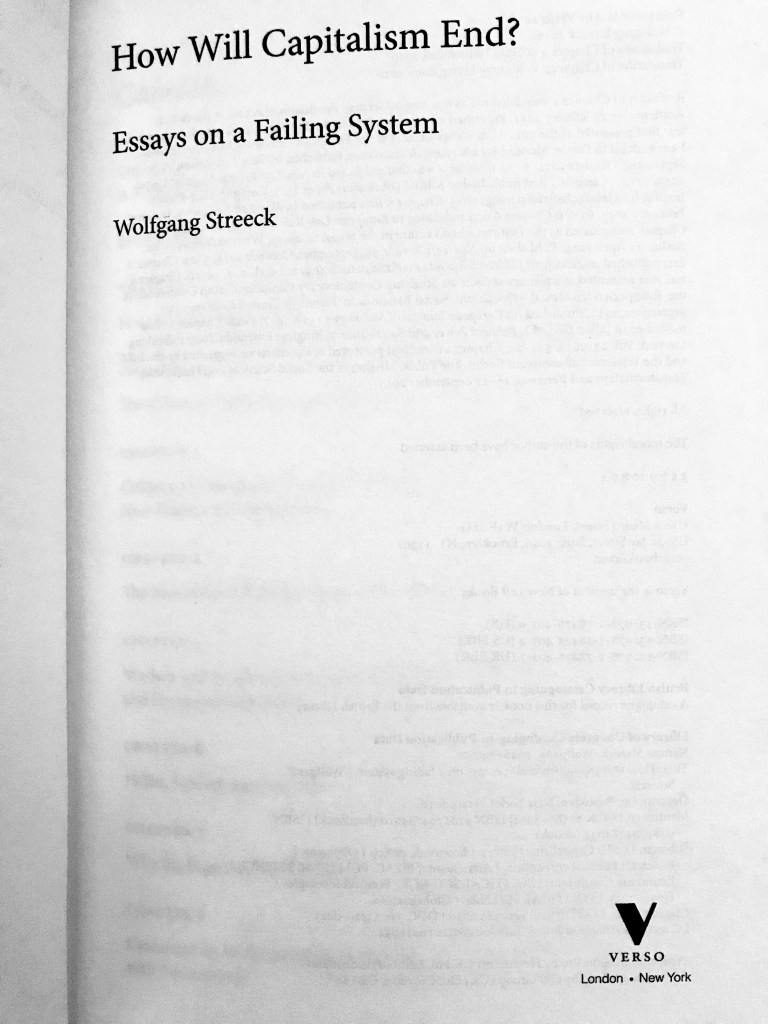
    [1] Streeck, Wolfgang: How Will Capitalism End? Essays on a Failing System. Verso Books, London, 2016: 1.

    [2] 2

    [3] 4

    [4] 59

    [5] 60

    [6] 65

    [7] 69

    [8] 70

    [9] 71

    [10] 72

  • Notes from Jan-Werner Müller

    fullsizerender

    From Müller, Jan-Werner. What is Populism? University of Pennsylvania Press, Philadelphia, 2016.

    *

    Populism arises with the introduction of liberal democracy; it is its shadow.[1]

    Populism is a particular moralistic imagination of politics, a way of perceiving the political world that sets a morally pure and fully unified—but ultimately fictional—narrative of people against elites who are deemed corrupt or in some other way morally inferior. In addition to being anti-elitist, populists are always anti-pluralist: populists claim that they and only they represent the people. There can be no populism without someone speaking in the name of the people as a whole.[2]

    A core claim of populism is that only some of the people are really the people.[3]

    Principled, moralized anti-pluralism and the reliance on a non-institutionalized notion of “the people” also helps explain why populists so frequently oppose the “morally correct” outcome of a vote to the actual empirical results of an election, especially when the latter was not in their favor. […] Convention itself is rigged. In short, the problem is never the populist’s imperfect capacity to represent the people’s will; rather, it’s always the institutions that somehow produce the wrong outcomes. Even if the institutions look properly democratic, there must be something happening behind the scenes that allows corrupt elites to continue to betray the people. Conspiracy theories are thus not a curious addition to populist rhetoric; they are rooted in and emerge from the very logic of populism itself.[4]

    Populists always want to cut out the middle man and rely as little as possible on complex party organizations as intermediaries between citizens and politicians. The same is true for wanting to be done with journalists: the media is routinely accused by populists of “mediating,” which is exactly what they are supposed to do, but which is seen by populists as somehow distorting political reality.[5]

    While populist parties do indeed protest against elites, this does not mean that populism in government is contradictory. Many populist victors continue to behave like victims … polarizing and preparing the people for nothing less than what is conjured up as a kind of apocalyptic confrontation. They seek to moralize political conflict as much as possible. There is never a dearth of enemies, and these are always nothing less than enemies of the people as a whole.[6]

    It is with the rise of the Tea Party and Donald Trump’s rise in 2015-2016 that populism has become of major importance in American politics. Clearly, anger has played a role, but anger by itself is not much of an explanation of anything. The reasons for that anger have something to do with a sense that the country is changing culturally in ways deeply objectionable to a certain percentage of American citizens. There is the increasing influence of social-sexual liberal values in which white Protestants (the “real people”) have less and less purchase on social reality.[7]

    Populists should be criticized for what they are—a real danger to democracy. But that does not mean one should not engage them in political debate. Talking with populists is not the same as talking like populists. One can take the problems they raise seriously without accepting the ways in which they frame these problems.[8]


    [1] 20

    [2] 19-20

    [3] 21

    [4] 31-32

    [5] 35

    [6] 42

    [7] 91

    [8] 103