Category: writing

  • Conversation with Voltaire c.2016

    Voltaire

    T: You ask what is tolerance? Tolerance is an objective.

    V: It is the natural attribute of humanity. We are all formed of weakness and error: let us pardon reciprocally each other’s folly.[1]

    T: Easy for you to say. Things are tense here. You’re dead. I have a daughter now. The world is more confusing each month. I pace indoors, my mind a temple of intensity. Sleep is a luxury I cannot afford. I’d rather study and write—do my part to help solve our problems. Thus I look to sages like you for guidance.

    V: It is said the present gives birth to the future. Events are linked to each other by an invisible fate.[2]

    T: If this is a renaissance, it’s a morbid portent. It is as if the world is sick. America itself is ill with pervasive discontent.

    V: There is no other remedy for this epidemic illness than the spirit of free thought, which, spreading little by little, finally softens men’s customs, and prevents the renewal of the disease.[3]

    T: I agree, and in light of current events, in which communities of peace officers roam American neighborhoods like armies, in which whites can’t even agree that or are afraid to exalt that BLACK LIVES MATTER, another remedy beyond free thought is respect for our fellow men and women and the infinite potential inside them, for as you once wrote, “We should say to every individual: Remember thy dignity as a man!”[4] For I wake each morning and read the newspaper and often I cannot sit. I am physically pained at what I read.

    V: This feeling of pain is indispensible to stimulate us to self-preservation. If we never experienced pain, we should be every moment injuring ourselves without perceiving it.[5]

    T: Fanaticism has kidnapped the minds of men and women. Since we invented religion we have murdered in the name of it, and we continue to do so. Such fanaticism has spread into the political realm. Anger and fear dominate. People are afraid that if they don’t assert their convictions, they will be victimized. Moderation has evaporated in the overabundant breath of rhetoric. The people’s politics are exclusive rather than inclusive, derisive rather than unifying. History has shown us that such moments are regrettable.

    V: Show these fanatics a little geometry, and they learn it quite easily. But strangely enough their minds are not thereby rectified. They perceive the truths of geometry, but it does not teach them to weigh probabilities. Their minds have set hard. They will reason in a topsy-turvy way all their lives and I am sorry for it.[6]

    T: I’m not sorry for them. They get what they deserve. In America they only have two choices, candidates who appear at first glance to be siblings: A woman who, according to federal investigators, has been “extremely careless with information” at her privileged disposal, and a man who has been openly and dangerously intolerant of people that do not look or think like him. They pander and feed the public narcotic doses of false promise. These are perhaps the most tepid of charges against them.

    V: So tell me, you who have travelled, who have read and observed, in which state, under what kind of government would you have liked to be born?[7]

    T: I wave no flag and never will. I would have liked to be born WITH a government rather than UNDER one. The older I become, the more oppressive the weight of that government, the more necessary to shrug it from atop me.

    V: Laws have proceeded in almost every state, from the interest of the legislator, from the urgency of the moment, from ignorance, from superstition, and have been made at random, irregularly, just as cities have been built.[8] In general, the art of government consists in taking as much money as possible from one part of the citizens to give to the other.[9]

    T: I’m afraid the stakes are much higher than money. Western culture’s priorities are grossly misaligned. Emphasis is erroneously placed on sports and entertainment and the people are utterly disengaged until a horror seizes their attention.

    V: But where are they to be found who will dare speak out?[10]

    T: They’re everywhere, unfortunately. What they have to say is often more harmful than helpful. I dare speak, but who will listen? For “it is far better to be silent than to increase the quantity of bad books.”[11]

    V: It is impossible for society to subsist unless each member pays something toward the expenses of it, and everyone ought to pay.[12]

    T: Yes, but “try to arouse activity in an indolent mass, to inspire a taste for music and poetry in one who lacks taste and an ear, and you will no more succeed than if you undertook to give sight to the blind.”[13] In people’s certainties of their beliefs, they stop searching and their ideas stagnate, become a cesspool. They are certain of their beliefs and that is enough; little else matters.

    V: If you’d asked the entire world before Copernicus if the sun rose and set that day, everyone would have answered: We are absolutely certain of it. They were certain, and they were mistaken.[14]

    T: All the more important that “[we] boldly and honestly say: How little it is that I truly know!”[15] Rather than shout their beliefs over another’s, why do they not close their mouths and listen? Why do they accuse rather than acknowledge?

    V: This is the character of truth: it is of all time, for all men, it only has to show itself to be recognized, and one cannot argue against it: A long dispute means that both parties are wrong.[16]

    T: So “who shall decide between these fanatics? The reasonable, impartial man who is learned in a knowledge not of words, the man free from prejudice and the lover of truth and justice—in short, a man who is not a foolish animal, and who does not think he is the angel.”[17] As I said, I look to you, but you were no angel. Harsh words against Muslims and Jews populate your texts.

    V: It takes 20 years for a man to rise from the vegetative state in which he is in his mother’s womb to the state when the maturity of reason begins to appear. It has required 30 centuries to learn about his structure. It would need an eternity to learn something about his soul.[18] In the land of where the monster reigns, almost everyone is blind.[19]

    T: I wonder what I do not see. Monsters abound in plain sight. Each week strikes a new terror worst than the last.

    V: If there were only two men on Earth, how would they live together? They would assist each other, annoy each other, court each other, speak ill of each other, fight each other, be reconciled to each other, and neither be able to live with nor without each other.[20]

    T: Some fighting is understandable, but why so freely kill each other? Across the world innocents are murdered as a means to an end, to espouse a statement or idea. Why not verbalize those statements and ideas? Why the fear of black men on behalf of the American police? And why the murderous retaliation upon the police when such actions force us retreating backward?

    V: It is forbidden to kill.[21] To murder our brethren, can there be anything more horrible throughout nature?[22] We are told that human nature is perverse, that man is born a child of the devil, and wicked. Nothing could be more foolish. You are all born good. Witness how dreadful it is to corrupt the purity of your being. All mankind should be dealt with as all men individually.[23]

    T: Still, there is too much. At times I am beaten down with it.

    V: There is infinitely less wickedness on Earth than we are told or believe there is. There is still too much, no doubt. A melancholy mind which has suffered injustice sees the Earth covered with damned people.[24]

    T: I don’t see them as damned. But “more than half the habitable world is still peopled with humans who live in a horrible state approaching pure nature, existing and clothing themselves with difficulty, scarcely enjoying the gift of speech, scarcely perceiving that they are unfortunate, and living and dying almost without knowing it.”[25] I’d like to help them find their voices. I’d like to level the playing field.

    V: As men have received the gift of perfecting all that nature has granted them, they have perfected love.[26]

    T: They have not perfected love. They have not perfected anything. Perfection does not exist. Perhaps it is all we can do to continue down this path of inquiry and reflection. Rest not, my dead friend. Your ideas are wide awake and eager for an audience. The fire burns inside me so it must burn elsewhere.

    July 2016


    Works

    Besterman, Theodore, editor. Voltaire’s Philosophical Dictionary, Penguin Books, 1972.

    DuMont, E.R, editor. Philosophical Dictionary, from The Complete Works of Voltaire in 43 Volumes, St. Hubert Guild, 1901.

    Redman, Ben Ray, editor. The Portable Voltaire, Viking Penguin, 1949.


    [1] Redman, 212.

    [2] Besterman, 109.

    [3] Besterman, 203.

    [4] Redman, 228.

    [5] DuMont, vol. IX, page 265.

    [6] Besterman, 189.

    [7] Besterman, 192.

    [8] Redman, 224.

    [9] Redman, 225.

    [10] Redman, 224.

    [11] Redman, 223.

    [12] DuMont, vol. X, page 174.

    [13] Besterman, 76.

    [14] Besterman, 106.

    [15] Redman, 225.

    [16] Redman, 198.

    [17] Redman, 198.

    [18] Redman, 160.

    [19] Redman, 162.

    [20] DuMont, vol. XIII, page 104.

    [21] DuMont, vol. XIII page 106.

    [22] DuMont, vol. XIV page 198.

    [23] DuMont, vol. XIV page 215.

    [24] Dumont, vol. XIV page 219.

    [25] Redman, 225.

    [26] Besterman, 30.

  • Zero K: The Master Speaketh

    IMG_2883

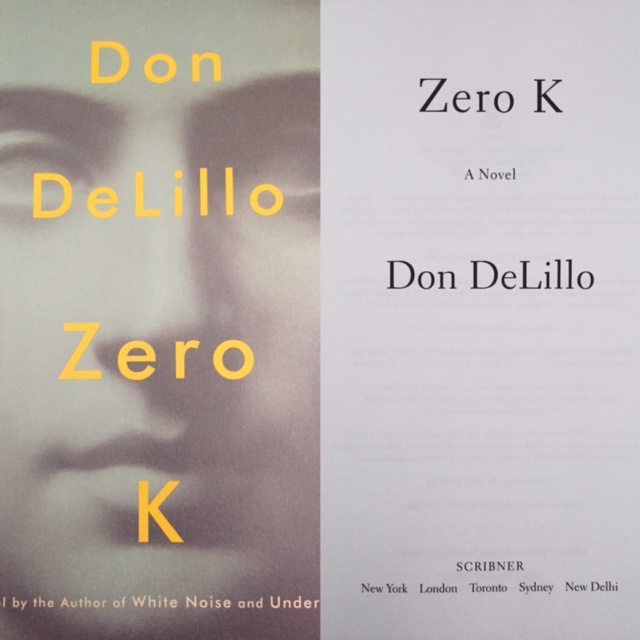
    Every time another Don DeLillo novel is published I wonder if it will be his last. He is 79 this year, the author of 16 masterful novels, three plays, and a story collection. I eased into his latest novel Zero K with the master’s age in mind, reading gingerly at first, cautious; it pains me to imagine DeLillo’s mighty pen reduced by the erosion of age. But soon I’m reading at that familiar tempo that lives in his novels, a pulse of language that carries the reader through, slowly, returning over almost every sentence to examine the breadth and beauty of them.

    Just as the pulse of language runs through each novel, there’s also a feeling, an ethos of paranoia, intelligent detachment, but also something unique to each work. White Noise makes us afraid and self-aware, Great Jones Street isolates us. We are particles adrift in the great expanse of Underworld. All DeLillo’s works carry an electric hum, Kubrickian overtones, post-modern antiseptic, and the desperate search for perfection. Zero K is no different. What makes it unique among DeLillo’s works is its ability to pull humanity from inhuman subjects and abstract space. It’s largely a novel about science, or cryogenics, in particular. From the book jacket:

    Jeffrey Lockhart’s father, Ross, is a billionaire in his sixties, with a younger wife, Artis Martineau, whose health is failing. Ross is the primary investor in a remote and secret compound where death is exquisitely controlled and bodies are preserved until a future time when biomedical advances and new technologies can return them to a life of transcendent promise. Jeff joins Ross and Artis at the compound to say “an uncertain farewell” to her as she surrenders her body. 

    “We are born without choosing to be. Should we have to die in the same manner? Isn’t it a human glory to refuse to accept a certain fate?” 

    These are the questions that haunt the novel and its memorable characters, and it is Ross Lockhart, most particularly, who feels a deep need to enter another dimension and awake to a new world. For his son, this is indefensible. Jeff, the book’s narrator, is committed to living, to experiencing “the mingled astonishments of our time, here, on earth.” 

    Don DeLillo’s seductive, spectacularly observed and brilliant new novel weighs the darkness of the world—terrorism, floods, fires, famine, plague—against the beauty and humanity of everyday life; love, awe, “the intimate touch of earth and sun.” 

    But as with all DeLillo’s novels, it’s about so much more. It might not be his final novel but it is one of his best. DeLillo masterfully weaves readers through themes of suspension (physical and metaphysical), re-immersion, immortality, and our growing dependence on technology. But there’s also something soft at work here, burrowing, delicate as human flesh. There is love and grief and human sacrifice. The novel cuts but kisses our wounds. And I’ll probably not forget it for months.

  • virtual voyeurism

    Processed with VSCO with b5 preset
    “Bite the serpent’s head off!- so it cried out of me; my horror, my hatred, my loathing, my pity, all my good and bad with one voice out of me.” – Nietzsche, Zarathustra

    *

    Today’s video games are hyperrealist and meticulously designed cinematic experiences. The first-person shooter (FPS) is the second-most popular video game genre[1] among gamers, and FPS games possess some of the most profound examples of hyperrealism. The violence in these games is astounding. One of the gentlest people I know freely heaps bullets onto her virtual enemies as often as her personal schedule allows. A woman who wouldn’t hurt a fly in non-virtual reality eagerly awaits loading her latest game to dissolve her enemies with an impossible array of virtual gunfire. It’s fun, this recklessness. It’s also morbid. I eagerly seize the control, wondering why I enjoy playing these games or watching others play them. What instinctive horror does this virtual violence satisfy?

    [1] https://www.statista.com/chart/3599/americas-favorite-video-game-genres/
  • Ourselves

    78cb67f0-2ca1-40bd-a7f5-2d07fb21c6dc

    …as we proceed across fenced-in ghetto landscapes and through urban and suburban war zones infested with drugs and weapons designed to infiltrate homes like cockroaches; as we proceed through flooded wastelands comprised of failure—failure of the community, of elected officials, failures of mothers and fathers—a tangled mess of failed systems with THIS PLACE (and places like it) as the webbed epicenter; as we proceed through blighted examples of failed capitalism, failed cold-war policy, failed environmental and social policies, and failed educational infrastructures; as we proceed through desolate, insignificant prairies reserved for shattered generations of people, through packed penitentiaries full of history’s patsies; as we proceed we must look closely lest we overlook the mirrors of time, for EVERYWHERE we find ourselves.


  • Lights


    I stood in the doorway watching the lights in the night sky. It was hot for March. My daughter tugged at my leg. What’s that? she asked, pointing at the lights. I picked her up to hold her and we watched the lights together. The laundry machine churned in a room behind us. A neighbor pulled his crammed sedan into the street and exited the neighborhood in haste. Some of the lights in the sky hovered still while others slid slowly, almost imperceptibly, arbitrarily. My daughter wriggled uncomfortably and I set her down. Her mother darted determinedly about the house, asking questions and answering them. I watched the lights.

  • coincidence

    courtyard

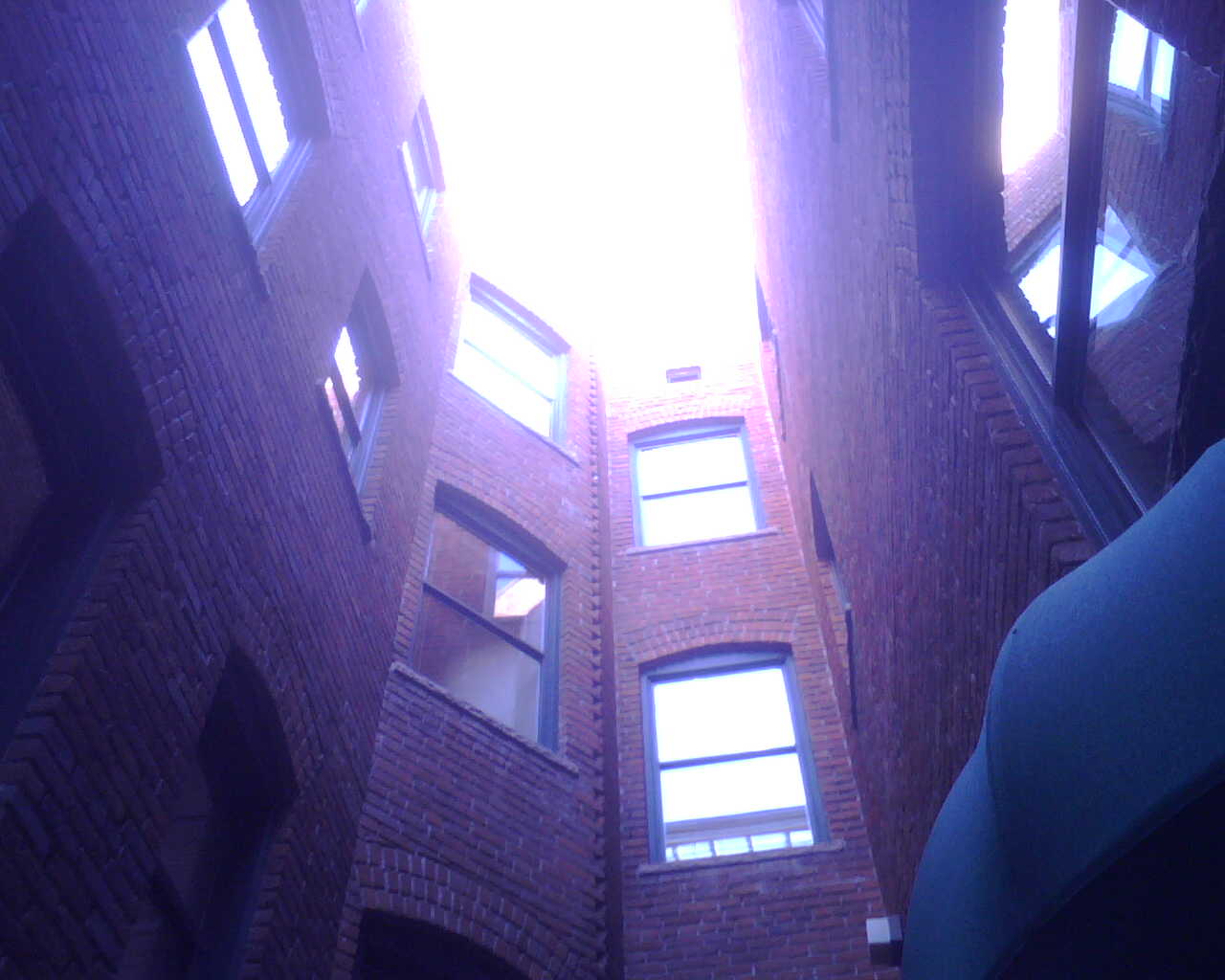
    I wonder what he thought as he crossed the threshold from his house out to the bright day, knowing he’d never return, that his memories would remain within those walls and the vast majority of them would be forgotten and discarded, occupied by strangers. Everything he wondered about the end was just like he thought it would be and nothing like he thought it would be. He thought of his wife and five decades built in that house and other houses and he believed he was one step closer to joining her, and for that he was relieved. The house, how fiercely he clung to it and how easily the two medics lifted and carried him into the windy morning to their chariot. How confused he must have been, how eager to get it all over with. Maybe at the end he realized he’d fought so hard for all those years for nothing. All of it just a huge coincidence. When he finally let go, maybe he laughed.

  • study in repose

    IMG_0884

    The young man looked at Desmond Paul, at his face, an expression grave and elsewhere, his eyes tense and electric. Paul walked with his head down, bent slightly forward, one hand stuffed tightly into a trouser pocket and the other clutching his notebook. This is the most intense human being I have ever met, the young man thought, and walked alongside him, following him and not, past another set of large lobby windows looking out upon the rote morning ascent toward noon, windows looking inward toward nothing familiar at once save the careful arrangement of mystery inside us all.

  • god’s country

    LionscrestDuskGod’s country, I wrote, is simple in its grandeur. Rolling landscapes of green and brown cut suddenly steep by jutting buttes a million feet tall, or so it seems, one foot for each year on this rock, a billion light years from nowhere. Clouds misshapen unfurling to the blue, leading nowhere, leading to us; the changing colors of everything we inhabit luminous beneath the star responsible. It’s difficult to breathe at this altitude, well over a mile above the Florida swamps, which don’t exist from here. They can’t exist. The Earth is a ruin, a controlled burn, a series of bloated mirrors. It’s difficult to look out over this expanse of beauty, this treasure for the senses, and not believe in some kind of god, in something greater than all of us, in the ability to traverse it all, forward and reverse, as the earth slides soundless in the void.