Category: Truth

  • Marquee

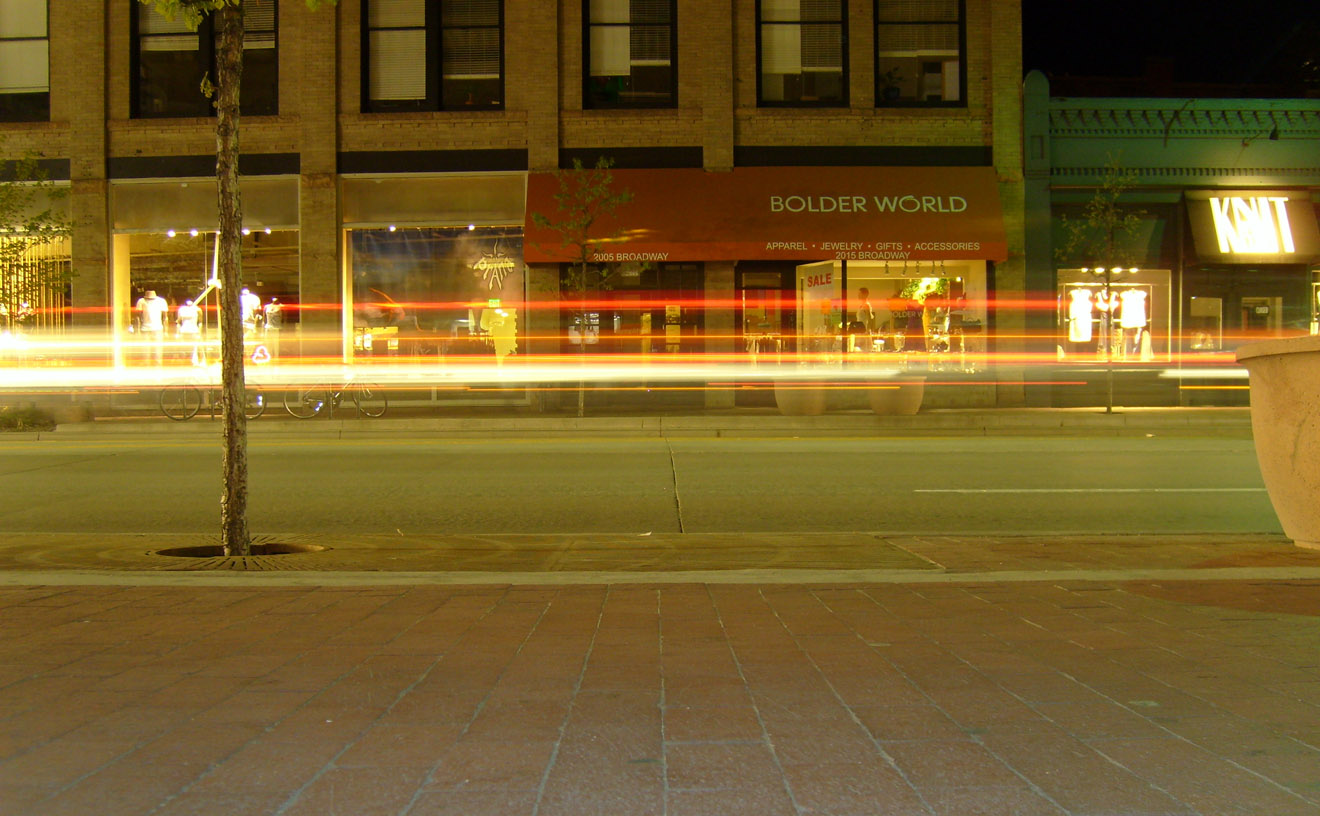
    In the town of young men and women voices could be heard shrilling in the quiet pocket of night. Streetlight glow painted the walls of the closed brick shops on main street and the young men and women walked drunkenly by them clutching at one another and laughing at nothing but the levity of their shadows and the understanding that this world belonged to them under some unpenned contract with the figurative constraint of time looming somewhere indiscernible. The young men and women came from privilege and knew that privilege would be awaiting their immersion back into the real world and clouds danced swiftly in front of the oblong moon so close and yet so distant from their lives.

    They lived in shared light and they spoke of the dreams they often had with nothing but youth in their guises and the young women drank and danced and the young men drank and watched the women and all of them were living deviations of those people they otherwise always were. They fell in love with the poisoned facades of themselves and squandered their summer days and nights and some of them discovered the nature of their childish rue while others glimpsed clear and firm into their future and saw a formal departure from the very youth that bound them. There were many days of heat and stupor but there were even more nights of blithe abandon and the recklessness we tend to tolerate until a particular age or experience of life’s revolving strain has been reached.

    The sun or the scent of a friend awoke them in the afternoon and carried them through another boundless and eventful evening worthy of their potential narratives in the far-off and same but somehow much different life. They knew they were constructing the future diagram of their fondest and most bereaved reminiscences like the perfumed skin of all their favorite summer romances, like the collective delight of all their twilight laughter. The young men and women operated beneath the protective shroud of the town’s own undemanding regulations and flourished in the narcotic bliss of being young and knowing it and heeding to no authority save for that which lives among the tanned hide and billowing hair and rampant nubility of its hormonal supplicants.

    I knew this town and I lived there as witness to its mystical lessons. I grew disenchanted by its charm for I was no longer young nor free of responsibility and perhaps I never had been. The tension swelled within me so that soon I grew to imagine a world where the town of young men and women no longer subsisted but burned steadily somewhere between the iron gates of perdition and the subtle snickering memory of those who had escaped the wrath unforeseen. I imagined the young men and women running naked and hairless through the smoldering streets beneath a bloodred autumn sky with their skin bubbling from the heat and their eyeballs liquefied and melted to their cheeks.

    There was caution in my rumination but I believed the agonized fate of the young men and women to be taut and certain. Each night I dreamt the same horrific dream where the town collapsed in fiery ruin and the sky turned black above those callow heads and all the smiles and all the town clocks were washed away in sweeping conflagration while sparing the select few dramatis personae compliant enough to withstand the terror and each morning I awoke from that same dream smiling. I would walk to work and see the young men and women in the town still awake and poisoned from the night previous and I knew that God would play the role of god in the film version and I would direct the cataclysmic beauty of the tale to the visual medium and watch orgasmically while the young men and women of other towns across the cosmos sat mesmerized into silence by the film’s searing truth. And I knew my name would appear on the marquee just above the title of the film in thick red letters and that the earth would ultimately swallow that black hole of loathing where neither future nor past was ever paid any deference.

  • Scars

    I watched her fingers trace the angles of my chest down to my abdomen, deep ridges of muscle and bone and patches of coarse hair and skin darkened in thick tracks of scars. I watched her hand grow timid about the stained edges, as if touching the scars would bring back the memory of what had caused them, as if my seeing them each day and feeling about them with my own fingers wasn’t memory enough.

    What happened, she said.

    I thought of lying, about how I fell drunk from a window and landed on some rocks or broken glass or maybe about how I was in a fiery accident or a knife fight and needed surgery to re-stitch the deeply shorn tissue. Something that might make her nod or smile or laugh and then forget it all. But she was gentle and seemed forgiving and so I told her the truth. She listened and was silent for a while and her fingers grew still and rigid on my skin and I regretted telling her almost immediately.

    Are you serious, she said.

    After a few minutes she rose and walked to the bathroom and I breathed the warm air of her departure on the sheets. There was artificial innocence and deep acceptance and years of hurt in her scent. She was like most every other woman. Light framed the closed door, a symmetry of knife edges in the dark. I heard the toilet flush and then the hiss of the faucet. She opened the door and stood in the frame, half-lit and exposed to the darkness, her nakedness stark and emblematic and teetering between the shadow of here and now and the verity of past light.

    I’d better be going, she said.

    She gathered her clothes about her and put them on methodically but gracefully, like I wasn’t even in the room. As if it wasn’t my room. As if she had done this a thousand times in a thousand different rooms just as I was certain she had. The clothes had come off in haste, without ceremony, the sole neutralizing obstacle to will. Now she stepped into them just as quickly and callously but with robotic calculation, like the clothes were a requirement and nothing more, as if they reminded her of her life before she took them off and how this new life was exactly like the old life and nothing like she thought it would be or perhaps hoped it would be. The clothes reminded her that nothing had changed, nothing would ever change. The brief nakedness between lives was her hurried respite from herself, from both lives.

    It was nice meeting you, she said. Call me some time.

    She sat and the edge of the bed sagged beneath her. She reached into her purse and rummaged through it and I wondered if the bathroom light was bright enough to kill moods and strains of moods or if it would even stop there and I could hear the wind whipping through the city outside my window but I could hear nothing more save for the screaming of bedsprings as she stood up and put a folded piece of paper with her phone number inside it on my nightstand. She crawled on the bed toward me and kissed me softly on the cheek and then the side of the mouth and for the first time I understood her intense sadness and its brutal dominion over her young life.

    She walked out the door and shut it softly behind her and I could still smell her pale nomadic skin and her scalp and her breath woven into threads of the moment now lost to us. Her ghost haunted me through the night and so my dreams reverted in myriad to that lonely face at the far table in the coffee shop, that dark, worm-like body of abandon atop mine, shivering with the brief delight of self-sustaining sovereignty of soul. I closed my eyes and traced the scars on my stomach and torso with sudden longing for I never even thought to search her body.

  • Crescent

    “That’s just too much to think about,” he said, waving a cigarette. “I mean, think about it. We’re young. We have our games and our bars and spars with emotion. We have our ceremonies. We have sex and pop culture. We have sex, mostly. This is what concerns us. This is how we find value in our lives, by how much sex we have. What more do we need? I mean, who wants to break all this rhythmic lovemaking to worry about elections?”

    He sucked on his cigarette, the garden light behind him breathing electricity into the white smoke, thickening it into luminous veined strands. He looked up at the deep black canvas sky, a breathing shadow silhouetted on pale light, a living penumbra of audacity. He smiled.

    “But I see what you’re saying. This stuff is important. This stuff should be important. What I’m saying to you is our priorities are confused. You and me and our whole generation. We’ve graduated into ethical destitution. We’ve been moving this way for years. Activism and social justice are irrelevant to us. History and our culture has dictated to us the ignoble farce of our own lives, it has fashioned us into gluttonous instruments of superficiality.”

    I shook my head and the woman walked toward us, slinking into our light, a slow dirge of crickets announcing her arrival. There was an empty plastic cup in one of her hands.

    “What are you boys talking about out here?”

    “Your boyfriend here was just explaining the privation of virtue common to our generation,” I said. “And I was just preparing to refute his bullshit and destroy him intellectually.”

    “Take it easy on him,” she said, her body melting into his, their arms disappearing behind one another into those ritualized human folds, those tactile zones of repetitive comfort. The small of the back. The nape of the neck. Gently rubbing and patting. A stray finger jutting somewhere below, a test of safety and assurance but also identity, the interpersonal barometer of another’s mood, the formalized suspension of leeriness, a subtle acknowledgment of partnership. This body, this strange and miraculous human shell of pulsing cells, where skin and hair entwine in the murky heat and residue of dimpled flesh, the lines of animal and operator integrating the fragments of pure behavioral essence. This is what I thought about in that brief flashing moment as I drank from my cup and waited for my friend’s predictably lowbrow retort.

    “He told me himself that he uses big words to compensate for his inability to please women.”

    “Play nice,” she said, kissing her boyfriend softly on the cheek and filling her cup from the keg of beer nestled benignly between us. Then she stepped out of the light and moved toward the house, chatter wafting lazily from its open windows, men and women laughing together over the sleek resonant drawl of cozy urbane music. These summer nights are heaven, I thought. I’m dead and this moment is the post-elegiac reality of my former life, thrust into perpetual bliss, this is what I’ve chosen to take from the succession of years of toil and reward to project upon the eternal screen of my career as a perceptive agent of experience. This is the crowning jewel of everything I ever was, my skin warm and sunburned, a warm stale beer in my hand and rivers of it in my blood, a smile on my face in the most tragically happy I’ve ever been, I’ll ever be, levity and something like ardor equally on display beneath the incandescence of history’s crescent moon.

    “I’ll tell you one thing,” I said, filling up my own cup. “There will come a night when politics is truly useless to men like you and me. It will be a dark night much like this, cicadas buzzing death chants from the trees, the moon looming large and fraudulent in a sky just as endless and inviting. It will be a night of a thousand thousand corpses, a night lit by the profane infernos of man’s destructive whims. The night politics died will be the night before men won’t be around not to talk about it the next day.”

    “You’re scaring me,” he said. “I’m trying to stand here on a beautiful summer night and drink beer and you’re concerned with politics and death and revelation. Whoever designed this god-awful scene paired me with the wrong character.”

    He filled his cup and we drank and others strolled out of the house in pairs to refill their cups. The music changed, a languid discourse of trumpet and alto over a steady athletic electric piano. The bass and drums were in there somewhere, holding down the measures, keeping everything intact, everything including the meaning of the song itself, and we bounced casual and profound ideas off one another until the dialogue approached that inevitable crescendo of laughter, the apex of the moment before we all reset and start again, shifting in our places, our skin, taking brief solitary seconds with our own thoughts before engaging in the others again, and we all realize in our own peculiar way how our scattered vignettes are somehow united out there in the lamp-lit perfection.

    “I wonder if heaven is anything like this,” someone said into the quiet.

    “Probably for some people,” I said.

  • a memory in algorithm

    Everywhere I look is where I see him.

    Downtown city streets awash in morning glow, throng of heads bobbing with the tide of rote obligation. Lives wholly separate but flowing together, a predesigned uniform cause. Thousands of personal histories carrying their preternatural weight, their stories. These are intersecting bloodlines, divergent strains of DNA coiled in distinct splendor, yet each of them anonymous and irrelevant when condensed by the crowd. Personal struggles no longer matter. Children and time and detailed subplots are trampled and forgotten underfoot. Fifteen paces up ahead a man turns his head in profile and the cold sunlight splashes his face, my father’s face, a snapshot frozen in memory long after the man regains his centeredness, facing forward.

    I quicken my pace, my eyes stuck on the back of his head. The image remains branded into my mind and my father resurfaces, not just his image or his face the way I remember it but his chided spirit, what it meant to be my father in this world, his burden of strain and deep disconnected habit. In a span of seconds I’m thinking of how my father’s legacy is imbedded in my body and mind. I’m thinking of my commitment to him, of our brief interaction on this planet and its stranglehold on everything I touch. It was just a stranger in a blinking moment of illusion but it was also my father, a careful revelation into my origins, a walking memory of a man that has become so much more than flesh and blood.

    The crowd seems to thicken, to intensify in density, a calculated frustration of my pursuit. I move faster, sweating now in the morning frost, hoping he’ll turn again. Next time I’ll get a better look, I’ll prove to myself that it is just a stranger and not my dead father. It couldn’t possibly be him, the man I hated and loved, the man upon whom my own genetic habits and tendencies were patterned. I walk faster still, his steps matching mine. He moves at a rate of imminent escape.

    An old man stands against a giant gray building and plays songs on his battered guitar, the case open and virginal in front of him. His face is scrunched into the drawl of a song, a slow expression compressed by years of struggle. He looks nothing like my father. His song is beautiful, a steady weaving lament of molten silk, and in this brief encounter I’m saddened by the way it gets lost in the bawl of activity. The streets throb with the morning crowd, an aura written in plumes of people’s steam, the vehicle exhaust. Paper coffee cups and flickering traffic lights and cellular phones. The history of the city is written in the rebirth of the morning, in the success and toil and steel and glass and concrete of yesterday, the forgetfulness, the failed dreams scrawled in stained sidewalk residue. I look up and the likeness of my father has gone, merged into the confluence of everyone and everything.

  • Broken mirror

    And so they walked into the library, towering cathedral of light. Devotees in tandem surrounded on all sides by mankind’s greatest gifts to the universe. Dyed cloth and leather-bound truths stacked in neat proportion, titles and subtitles stamped and translated upon the spines of those immortal wardens of knowledge. The books filled the shelves and climbed to a rectangle skylight high above.

    “There was a time when our lives connected, you and me,” he said. “A symbol, a thread. Symbol of a thread. Two people mirroring each other, hundreds of miles apart. Shadowed beings in complicit multi-dimensional transit.”

    “It wasn’t like that, really.”

    “My actions as demands upon your actions. You, urging me onward, my movements and decisions like subconscious pullings from another realm. A voice in the night. It was like having a twin, a shared consciousness, our destinies converging at a precise gridline somewhere in the margins.”

    “I never felt that,” she said.

    They walked slowly past the As, their eyes darting upward into the soft light, registering those sacred forgotten names, a recollection of something intimate experienced long ago, some message renewed, a respect paid in rapid fire as another name crossed their periphery. Achebe, Allende, Andrzejewski, Augustine.

    “One and two, two and one,” he said. “One and the same. The same. An error in code, the single miscalculation of the universe. Me reincarnated as you but living in the same fluid scale of time, sharing the era. Past and future in mystical collision. Two autonomous minds subjected to the frailty of oneness.”

    “What does that even mean?”

    “But then love confronted us, showed us who we were. It was like a mirror set before our eyes, yours and mine, in our different places. Love convinced us we were two separate souls pointing in opposite directions. It broke our bond, broke us down, built us into distinct forces. Love is the reason we are alone.”

    “Who are you?” she said.

    The simple curve of the C, with serifs and without. Camus, Cervantes, Chekhov. The slender shape of primitive weaponry mutated and frozen into meaning by the men and women who have wielded the letters most deftly. Coetzee, Conrad, Cummings. To learn about a place and a people, they must be experienced directly, firsthand. Our next best option is to absorb their literature.

    “Disclosure has stricken us with solitude. We no longer share the same course of thought, driven into our shared plane of existence. I’m only half alive because the other part of me died when I met you. Before, you guided me. Now you aren’t even there. The voice is gone. I hear only my own voice,” he said.

    They walked past the Es, the Fs. They didn’t see each other, half-listening, vision stretched to the limits of stimulation. The books contain, among other things, concentrated thought, the stories of generations and caste struggle, individuality at its strongest, its most raw and vulnerable. The beauty of the mundane, the horror and magnitude of the sublime. Comedy and tragedy, Faulkner, France, Frost. The most important minds of their culture, the disdained, the persecuted, the exalted, the romanticized and peculiarly burdened.

    “I used to lie in bed at night and listen to my heartbeat, pretend it was footsteps,” she said. “The rhythm of my heart at rest was the pulse of a faceless man walking around the world. Black dress shoes shined to a luminous knife’s edge. He was walking around the world and when he finally got to his destination, I would die.”

    “What was his destination?”

    “It was me. He was walking to me. He still is. He’s somewhere on this planet, walking. And when he finally gets to me I’ll see his face, eyes dark and replete with revelation, calm assurance from pale nomadic death, and I’ll know that I was always right to trust my veins.”

    “We are a species that fears death more than anything,” he said. “We have created astounding myths to subvert death, to appease our fear. Death has no legs. It has no concept of time. When we die there is no big reveal, no fabricated deus ex machina. It cannot fool us. Death is a positive experience, it strips away all the negatives. It is the truest of truths, because, can you possibly think of anything more real?”

    Their voices bounced off the stacks around them and returned mostly the same but aged, withered at the edges, wiser and hardened. Their voices carried facsimiles of the stamped names on the shelves, Joyce, Kobayashi, Lawrence, the titles unfurling as they strolled, symbolic and fragmented histories, Ulysses, Tabishui, The Rainbow, horizontal and vertical, a tapestry of letters and colors emblazoned everlasting. Language as pure force. The skylight darkened high above, restless clouds stalking about. The library fell into shadow.

    “All these books,” she said, breaking the spell, uttering the heretofore unmentioned, slightly desecrating, or at least, de-mystifying the moment. “The names, the stories. Many of these books were written at such heavy consequence. People died for these words, these billion, trillion words.”

    “No,” he said. “They died for the ideas the words represent. These are history’s truest martyrs. Timeless spiritual reminders of ourselves in retrospect. We have a duty to them to uphold our own reflections, our own struggles, and relate them to progeny. We must do this not only in honor of their sacrifice but also to satisfy our own artistic impetus. Nothing is more valuable to a culture than its art. Art is the fight of the people, the revolving paradigm, the mirror of culture, idealizing human life in its confrontation with the divine.”

    Rushdie, Sartre, Stendal. Tolstoy. Twain, Voltaire, Whitman.

    They walked the entire perimeter and then turned to face the center of the room. Drowned in silent awe, an ardor for mankind and its potential, proud sentiments for the simplest of objects in concealment of the most complex ideas. In this way, literature is like humanity itself. They felt the books looking directly back at them.

    “We are still connected, you and me,” she said. “But instead of a shared drive, we strive to forge our own paths. This is the way it is supposed to be, the way it was always supposed to be. A human being is an inherently independent creature. The other people of his culture may serve a particular purpose, but a man or a woman must fundamentally feed his or her own will. This is the most basic necessity. All these books, this room full of books. It’s like a vault enshrining the battle cry of the individual.”

    “Love is the reason we are alone,” he said again, and they turned to leave.

  • Untitled

    When the rain had left she cast her eyes down to a puddle at her feet, her own shimmery reflection. Blue and gray evening sky, air sharpened to cool guillotine clarity. She felt the weight of the world slip away from her as the sky opened up, clouds painted pink and orange with god’s metaphysical exhaust. She watched herself in the water, disfigured by the truth of the moment, and she realized a particular energy flowing up through her, those frozen moments of pure identity, what it means to be alive when the sun sets after a storm and the birds come out to confront their melodious reckoning.

    The cars sat stationary behind her, a line of idling cars stretched back to the curve in the road, waiting for her. She heard them humming in her head and looked up, patience in uniform and an acknowledgment of something greater than themselves, their pocketed moments of scrutiny. Everything made sense. Time collapsed around her, the mirrored figure, the stationary procession of cars, their spellbound drivers, the sky, Earth, the rhythmic pulse of universal energy meeting at the rendezvous of flawed humanity. She took a final glance into the puddle and walked away, watching the drivers steel their machines onward, throbbing vein of continuation.

  • Untitled

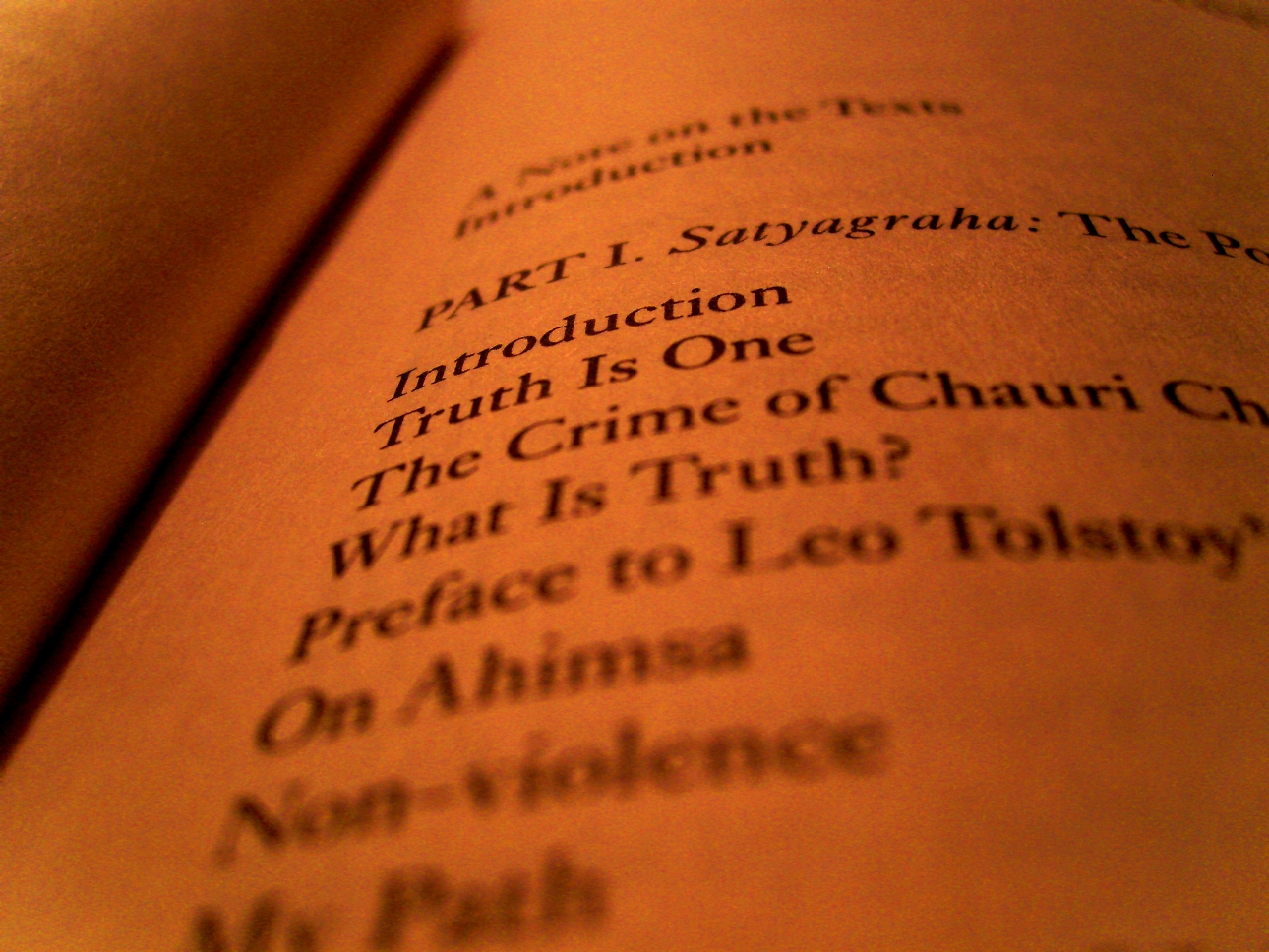
    satyagraha.jpg

    The man sat at his desk in the darkness. He listened to the reverent hum of the television in the next room, the adjoining wall whispering in tenored fuzz. He imagined the bluecast image of his wife and child spread together on the couch, their attention fixated on the hypnotic glow of the electric box. He could feel the warmth trapped deep down in the upholstery by the heat of their bodies.

    He reached to switch on the lamp above his head. Familiar objects spread before him, his typer, his papers and pens and their calculated arrangement like practiced definitions of his existence. A coffee mug half-filled with stale brown liquid, the surface slick with bean oil. He spent most of his hours thinking.

    The purpose of life, he thought, is not to become an object of someone’s understanding, though each minute that we are alive appears to be evidence that this is so, that somewhere out there someone understanding us must be tautological truth, that it is necessary for the migration of our souls and validation of our lives that we be understood in all our calculated aloofness. It seems that our lives cannot possibly be dignified without this.

    He lifted a pen and drowned the tip in the inkwell. He wrote: Sometimes when I’m writing, I feel like I’m doing it for progeny just as much as myself. If this documentation serves some overreaching purpose, it’s the enlightenment of others to the deep complexities of he or she who creates and transforms the data into language and imagery.

    The light went out in the lamp above him. The deep vibrato in the wall continued. He thought it strange how the electricity sometimes failed in this one room but continued in all the others. He put the pen down on the desk and stood to stare out the window to the darkened trees swaying with the mountain wind. Somewhere out there, he thought, an animal is alone, a breathing affirmation of what it is to be alive.

    His wife and child hardly noticed his shadowed presence slipping next to them beneath the blankets. It was a film about superheroes.

  • At end of day

    fogbw.jpg

    She looks out the great high rise window to the sprawling city, her hand pressed to the cold glass, staring past miles and miles of steam and concrete melded with steel and all the aromas and emotions and struggles therein. We make believe this matters, she thinks. This life. We do research studies and try to find patterns and gaps in the patterns although we know well enough what shapes our lives. We spend life looking for love and more often than not we don’t find it in pure form and so we ridicule ourselves, we are bred to believe that love rather than its pursuit is our ultimate goal.

    The world is gray this evening in the fading light and she removes her hand from the window. She thinks back to what life was like as a child in the streets of New York and she can’t remember. She leans forward, her forehead on the glass and her eyes cast fifty-eight stories straight down to the rote madness of rush hour and she retreats again to the idea of love, ironic notions, thinking that when we find ourselves paranormally blessed with that rare presence of anonymous affection and deep inward truth we cringe inwardly because love is never anything like we thought it would be and it ultimately uncovers things about us we’d rather have kept concealed. It is a matter of definition, entirely subjective, but the deadly force of love is the same anywhere and everywhere in the human psyche, complete in its distinction and without prejudice. Love and its intangibles command certain things from us in order to survive in their wake. It is a weakness of youth, she thinks, that we fail to recognize the overall pervading premise of love as learning. Love and life are about teaching ourselves how to channel regret and loss into motivating themes. This is what dominates our world, it tells us more about our humanity than anything else.

    She moves away from the window and looks at the clutter of paper on her desk. She flicks off the desk lamp, washing the room in shadow. The city seems to wrap its arms around her, each flickering light distinct and filled with wonder. She turns and grabs her jacket before leaving the office.