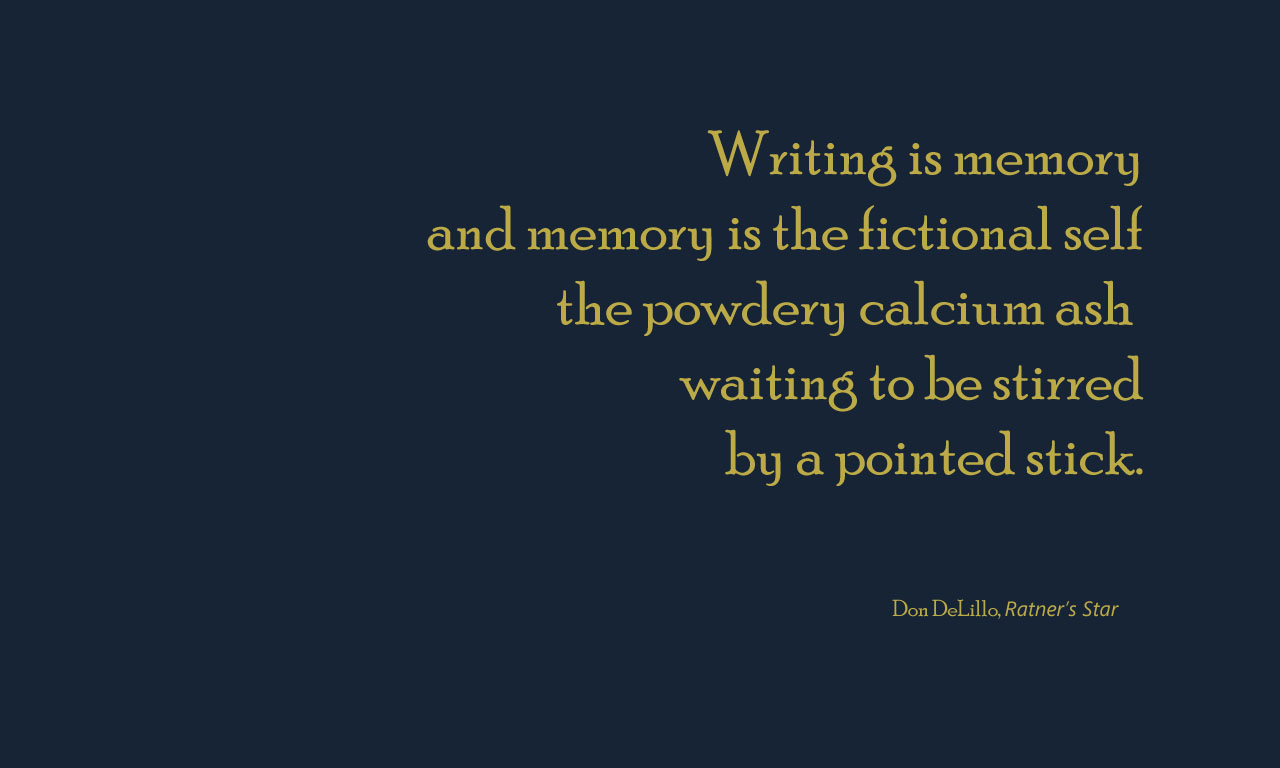
Category: Excerpt

  • Intimidation

    I pedaled into a roadblock just out of Edmonton. The road had been a long, winding path of concrete and mud and the security police had set up a robust blockade to check everyone heading east out of the city’s barren reach. They do this often, to ensure no one is trafficking any weapons or subversive materials away from Edmonton. It’s really just a display of authority, a systematic and unorganized symbolic intimidation. They stopped me with their rifles drawn and had me get off the bike. They unhooked my bedroll and my large bag of personal items and they dumped everything out. One of the officers did all the work while two others watched with their rifles ready. The officer squatted down. He reached in and fingered my smaller items and then he grabbed this notebook and picked it up, thumbing quickly through the pages. What’s this, he asked, showing it to me.

    It’s a notebook, I said.

    What’s written in it, he said, and started looking closely through it.

    You can’t look in there, officer, I said.

    The officer looked from the notebook up to me and then he smirked.

    You can’t read what’s inside, I said.

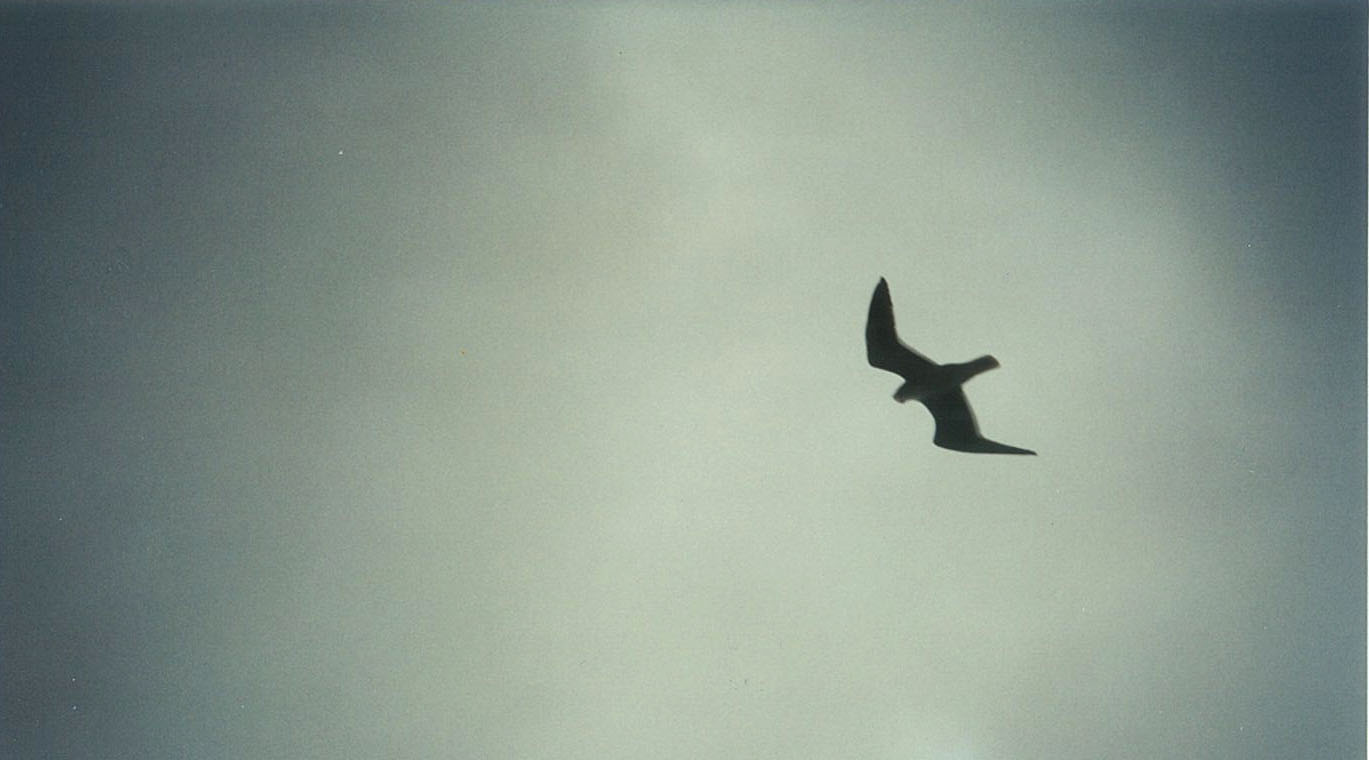
    The two men with the rifles gripped the guns tighter and I could hear the sound of skin stretching on metal, I could hear a hawk or something caw from up on high, the breeze warm and stale in my face, carrying dead fish and earth and pine.

    I swallowed and said, That’s personal property. As a member of the courier’s guild I am entrusted with important documents, and have, by order of the governing forces of this land, a right to carry personal property while en route to delivering parcels, whether it be a weapon or written materials.

    The officer stared up at me and then he looked at the other two guards, both of them primed for whatever directive the officer would give. The officer looked down at the notebook and clapped it shut and stood up, handing it to me. The two guards stepped back a bit but they did not lower their guns as I packed up my scattered belongings and strode onto the bicycle and pedaled east toward the long and winding dirt path, the stench, and the darkening skyline. The officer told me to hurry, leave, before any threat of penalty, and after a few seconds or so I was surprised to not have felt the bullets tearing into my back, my legs, my neck. My lungs were already on fire at thirty meters and after counting to a hundred I looked back at them. They were still watching me.

  • The fear begins

    Roots

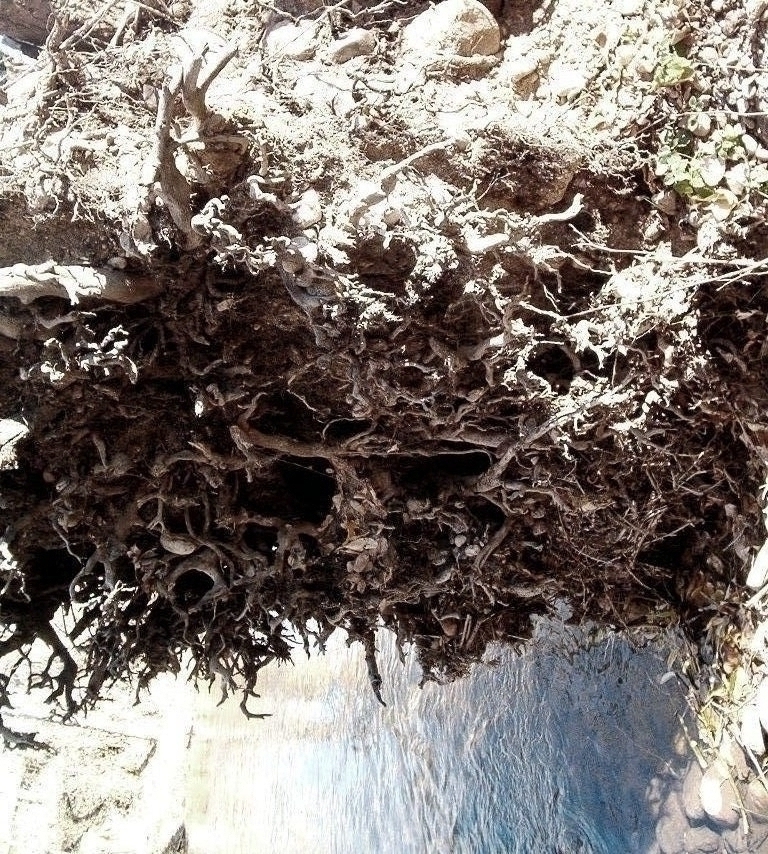
    I wake thinking of my mother, just as with every morning, no matter the haze or the rain, no matter the cold, I wake with the birds outside the window and air chilled taut seeping through the crack, I wake thinking of my mother though I hadn’t dreamed of her. I dreamed instead of a bulbous tree root, rotting yet strong, predictable, nothing exceptional other than its existence, a bulbous tree root deep in the ground where a faint seedling hatched long ago, springing upward toward the world of light and air, a seedling burst open like a cellular flame into the high day. On my right hand is a scab and I don’t remember how or when the wound was received and yet there it is, about the size of a small coin, scaly and maroon by the light of the window in morning repose. I lick the scab and it is dry and salty, its saline scales bulbous like the tree root of my dream, bulbous and asymmetrical. I pick at the scab, I study it, I try to understand. Is not the human body remarkable? Does not the world seem as though it were made for man alone? 

    I wake thinking of my mother and continue thinking of her until I force myself up out of bed with the birds singing somewhere outside, bleeping, chanting, a coded gesture of communion, I force myself up out of bed and to the desk, looking down at it, the clutter of papers and three books, all rented from the library and thoroughly read, my current notepad nearly full of words, a glass of water from last night, just a few hours ago, an apparition, myself a walking apparition. I think of my mother just as I do each morning despite not having dreamed of her and I don’t know what to believe, none of us really knows what to believe, we’re all apparitions, or the memories we so tightly clutch are all apparitions. Apparitions of apparitions. This desk, the books and notepad, the finger-smeared glass of water, this is my life. This is my life now as I know it. I sigh and sit down to write, the chair so familiar beneath me:

  • An Excerpt from the Enlightenment Project [revisited]

    Destruction

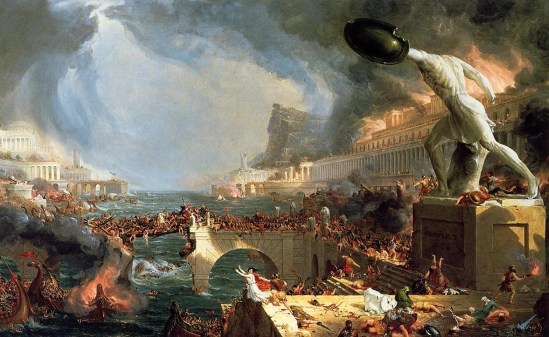
    I imagine I’m a slave in ancient Rome during the early reign of Octavian. I’m approaching middle age but in fine shape, and my meager education allows me to work as an accountant for a quite reasonable and beneficent consul. I do not know any other life or situation, for I was born into servility and have demonstrated strength and aptitude in my duties. The respect I display and the ethic with which I perform my work has awarded me a sense of freedom and respect from my master and in my community. The Republic is in disarray with the separation of Antony to the Egyptians and the whore Cleopatra. The consuls and the local population all fear the worst, that a total breakdown of the Republic is inevitable. Octavian has begun recruiting a vast naval army and I volunteer, resigning my work as a clerk in hopes of being completely freed after military service. For months I train as the tension tightens and war becomes more of a certainty.

    I have no wife, no children, and no family in a world that makes little sense to me. The machinations of man seem to govern all rules of the Earth, for we have truly become rulers of the land. There are no gods and the Republic is full of imbeciles who have nothing better to do than believe in mystic flattery. We are the true gods; the world is a hostile place where men encourage this hostility through politics and war and the perpetuation of enslavement. If I die in Agrippa’s war at least I’ll finally be absolved of this systematic separation of those with privilege and those without. The world is a cruel and barbaric place and the Republic is an ornate façade. I have studied Cicero and believe that a man stripped of the ability to govern his own fate is a gross injustice. So I will fight for my own freedom and nothing more; I shall not grieve if the Republic perishes.

    Most other slaves have it far worse than I. They toil and bleed and are murdered for no other reason than for the powerful to assert its control. I observe in silence, grateful for my luck, but am aware that it is luck and only luck that separates the diseased slave from me, only luck that separates the servile from the privileged. Is not man in his status as god the most cruel and unjust?

    [painting by Thomas Cole]