[D.C. police] aggressiveness [in the 1990s] came at an appalling human and eventually financial cost. A 73-year-old retired postal worker was beaten after officers mistook him for a suspect; the man ended up with a broken arm. A 56-year-old-woman was beaten with a nightstick after challenging officers involved in an altercation with two of her children; another woman was cursed at, hit, and maced outside of the restaurant where she worked. Much like Staten Island’s Eric Garner, a 31-year-old deaf man named Frankie Murphy stopped breathing while an officer held him in a choke hold; he died in police custody. After a dangerous ride in a police wagon–much like the one suffered by Freddie Gray in Baltimore–a 28-year-old former US Marine named James Cox won two separate lawsuits against the police. As a result of such incidents, D.C. paid out about $1 million per year to victims of police misconduct during the early 1990s. Yet the abuses continued.
At the same time, a culture of impunity flourished with regard to less violent but more common police intrusions into the daily lives of black citizens. Swearing and yelling, making belittling remarks, using illegitimate orders, conducting random and unwarranted searches, demanding that suspects “get up against the wall”–these behaviors rarely led to lawsuits or newspaper coverage. But for residents of the city’s poorest neighborhoods, especially young people, this treatment became part of the social contract, a tax paid in exchange for the right to move in public spaces. Police mistreatment became part of growing up.[1]
Whatever their individual intentions or motivations, officers were bound by a system that was the source of their orders, training, and beliefs. Their job was to make teeth rattle, “arrest those s.o.b.s,” and to prove that they were the biggest gang in town. In cities across America, they still do.[2]
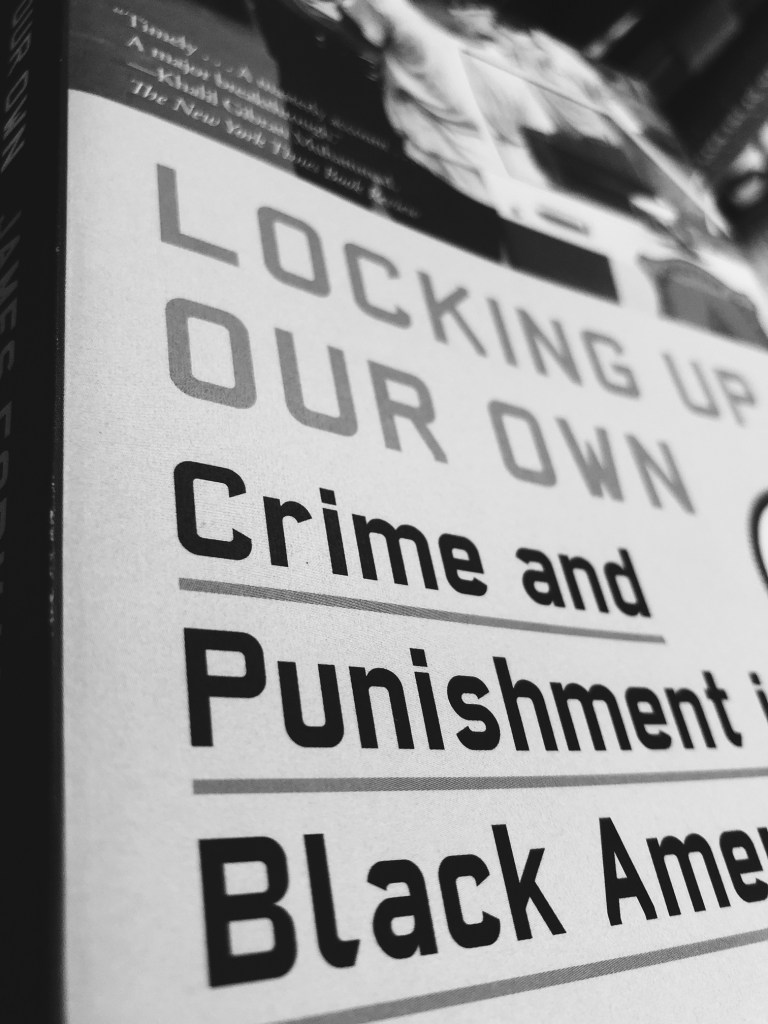
[1] Forman, Jr., James. Locking up Our Own: Crime and Punishment in Black America, Farrar, Straus and Giroux, New York, 2017: 171.


 truthfront