Tag: literature

  • In this room (he writes)

    woods_town

    In this room he sits facing the word machine with papers and notebooks scattered about the desk and the rest of the room is bare save a small window draped in pages of his various manuscripts to shroud the room in shadow. A pastel glow from the desk lamp splashes his own shadow on the bare wall at his back and outside of this room explosions wrack the terrain and crowds move in the subtle majesty of sheer mass, pestilence devours entire races of people like waves of famine, and messages of hope and peace infiltrate the violent leanings of men, but contained within the walls of this room are the most profound things, for this is where the spectacle of the outside world is extracted and concentrated and enumerated for posterity.

    There is news in his village of a great earthquake across the globe and lovers stroll easily through the city square but in this room the streets of Mexico City burn with the energy of rebellion and New York’s midnight veins purge the police presence from the subways and the children of Port au Prince dance upon the recycled ashes of tradition just as floods and windstorms reshape the surface and appearance of the earth. He sees himself in the crowds, the swaying hunger marches and chaotic zigzag sprints from terror. He sees his face looking back up at him in the words he writes. He stares into his eyes and smiles at the likeness, torturer of innocents, playing both victim and tyrant, ultimately a patriot for freedom of thought and individuality.

    For he only recognizes himself when he’s writing. The world continues to revolve and shudder deeply and burn in places and he’s huddled in some dark corner of the planet somewhere, in this room, thinking, staring into the mirror of his thoughts. He sees himself and looks away, focusing deeper, because he knows he is only relevant as a medium of the message, and at the root of his ability lays the most fundamental purpose, a vehicle in the continuous search for truth.

    In this room the walls are tremulous and time is heartless. He taps at the word machine and scans the papers, jots notes down in a pad. He can’t remember his voice. He only knows that no one shares it.

     [revisited]

  • House fire

    Ecrasezburn

    (For Patrick)

    The house was on fire, I believe it was the house on East Iowa Drive where my mother and sisters and I moved after mom remarried. I was twelve. I believe it was that house, but I’m almost certain that it wasn’t. My stepfather was there, as were my stepbrothers, as the ground floor began to smolder, casually, innocuously. My stepfather ordered us boys to retrieve whatever was important to us from inside and place it on the lawn in front of and well away from the burning house. Quickly. There’s little time. The fire department will be here soon to douse the flames, he said, and then we can move on to somewhere else, another house, perhaps another city. Naturally I took the computer notebook, the one upon which I now construct these words, a device I naturally didn’t possess when I was twelve, and that moment of self-regard was the first indication, the first lucid injection into my subconscious that I was in fact dreaming, that there was no house and there was no fire, at least not right then, not in my immediate experience. So I grabbed the computer notebook as I have told myself countless times to grab first in case of a fire — If there’s ever a fire, grab the computer, if nothing else, yes, of course, save the people, but don’t forget to also grab the notebook, it is essential, for what is a painter’s worth if he or she has no canvas upon which to paint, what value does an auto mechanic have if there is no car to operate on — and retreated to the front lawn. A lovely sunny day, spring, perhaps. My brothers had likewise begun grabbing what was valuable to them and placing it out on the lawn and my three brothers, all of them in various stages of their lives and appearance of age, moved quickly, almost recklessly, piling clothes and video game consoles and assorted items of personal significance onto the grass, and it was then that I felt the heat of the fire for the first time, the flames had spread out and slightly upward, as flames tend to do when sated, but then no flame is ever fully sated. I looked up at the house and I thought it was only a matter of seconds until the wood and stone would begin to crackle and fall, to disintegrate into charred fragments of the place we formerly used to live, and I did not feel sadness nor nostalgia but a crazed rush of adrenaline and I plunged back into the house just to feel its power and energy on my body. My stepfather yelled for me not to go back into the house but I ran in anyway, passing my youngest brother on his way out, his arms full of clothing or blankets or whatever. I stopped in the living area and looked upward at the staircase and saw each individual stair coated in blue and red and orange liquid fire like nothing else on the planet save the waves in a sea and I knew nobody would ever walk or run up or down those stairs again, not the way the stairs used to allow it, anyway, and the flames swelled to the ceiling, melting away the material there, the flames in complete control now, the fire’s insatiable thirst swallowing holes in the world and transforming the holes to black. Back outside the fire department had still not arrived but awed neighbors collected about the fringes of safety, looking up at the flames and the wonder therein, then down to our meager collection of valuables piled on the lawn, all of them peering into the intimate secrets of what we four boys decided we couldn’t live without. Crack and burn, hiss and moan. The acrid smell of smoke and us boys looking up in wonder at how the things of our lives smelled when they burned. Impulsively I ran back into the house despite the pleas from my brothers, my stepfather, the people standing near them but not too near, and immediately upon reentering the jungle of flames sections of the house collapsed around me, essentially pinning me inside, blocking out the power of the sun and sky that I knew I’d always taken for granted and might never again behold. Impossibly large beams of wood and steel fell around me as the house burst and multiplied in size, thirty, fifty times the size of the regular house so that it was no longer a house at all but a giant warehouse, or larger yet, a construction site on the scale of an airport terminal or a small city and we were trapped inside, my brothers and stepfather and I, as the building crashed around us, enclosing each new possible escape route, forcing us to run toward the light and air only to be suddenly rerouted upon its closure by a sheet of corrugated metal, my stepfather yelling as he ran, Where’s the fucking fire truck? Running through the careening frame of the building while it threatened collapse and our steps pounded faster, my incredibly small twelve-year-old body jumping over steel and iron obstacles and looking up to see whole portions of the building falling before me, crashing behind, dropping to the side of me. I was soon alone, separated from everyone else, desperate, my hope enclosed in my heart like I inside the warehouse, and just as I thought I would never make it out alive to breathe and to drink water and to laugh I found daylight at a hole in the side of the building and without looking I jumped out, floating silently in the freshest air hundreds of feet above a lush horizon of endless green lawn where I knew I would land, whether I survived the fall or not, to find my computer notebook and begin writing about it.

  • The architect, a fragment

    wpid-IMAG0164-1-1.jpg

    The architect remembered back to the first time someone tried to explain how his work made them feel. It was a young woman in drafting class in undergraduate school. She sat next to him and one afternoon he was immersed in his work and didn’t notice her staring over at what he was drafting. A lifeboat, she said, pulling him out of his creative trance. I’m sorry, he said to her. A lifeboat, she repeated. Looking at that drawing makes me feel like I’m on a lifeboat. The architect looked down at his drawing and then back to the woman’s face. She smiled. But I’m not sure if I’m saving someone or the one being saved, she said.

  • The fifth year

    ratner


    In the child’s fifth year it fully memorized all five of the sacred texts and decided to destroy them. While the rearing mother was outside the hut tending to the matters of the village the child tore the pages from the sacred texts and left the books spineless, ripping the lifeless pages even further so that the floor of the hut was littered with small bits of paper like shaved ice. The rearing mother arrived to find the child seated on the carpeted floor with a mound of paper scraps before itself, a sullen look on the child’s face, and the rearing mother didn’t understand what had happened until her eyes fell upon the disconnected spines of the texts, whereupon her eyes metamorphosed into a darkness deeper than night and she rushed over to the child, beating it with her open fists, screaming that the child was a devil, nothing but a devil, a devil all along, the child unconscious after the first ten or twelve blows to the head, and it wasn’t until an adolescent male villager outside the hut overheard the violence within and opened the hut door to find the holy child’s rearing mother astride the bloodied and motionless body of the pale king. The young man separated the rearing mother from the child and set her outside to face the fate of the profane while inside he tended to the child and ensured it was still alive, it was still breathing and could move. As the child’s broken bones healed and its wounds became scars the people in the village orchestrated a ceremony whereby the rearing mother was beheaded with a machete and her head displayed upon a stick for the people to parade about the woods with their torches of fire guiding them in the night. The people of the village sang and howled at their joy, they celebrated the holy death of the heretic, they returned to the village to find the child of god huddled by candlelight over its papers, its ever-present words and ideas that the papers couldn’t contain, for with age the human intellect activates, and the child, for reasons unknown to this omniscient narrator, had finally become convinced that the words he or she had been writing so feverishly were words or the pictures of words delivered directly from god, messages for the people, for the future, for all time and all people from the heavenly king. Everyone had been right, all the people of the village were correct, the rearing mother had indeed been the caretaker of a holy person, a medium between the common man and the god they worshipped, the child thought. The electric current of power slid though the child, intoxicating and rapturous.

  • Writers of the world

    wpid-IMAG0166-1.jpg

    She: Who are your favorite living North American authors?

    Me: DeLillo, McCarthy, Denis Johnson. Those are the three that come to mind.

    She: That’s it?

    Me: For North Americans, yes. I mostly read works in translation. Or writers who do not write in English.

    She: Why is that?

    Me: I don’t know for sure but, speaking of North American writers, it seems those who get the most attention or readership aren’t stretching the limits of consciousness. I’ve found that those who write in other languages are. Those are the types of writers I most enjoy reading. I suppose that is the type of writer I am.

    She: How about European writers who write in English?

    Me: How about them? The same idea applies. Of course there are hundreds, perhaps thousands of writers I have yet to discover. I cannot speak for them. I cannot speak for anyone.

    She: So what does that say about writers who write in English?

    Me: I don’t know.


  • in a parallel universe

    IMG_0631

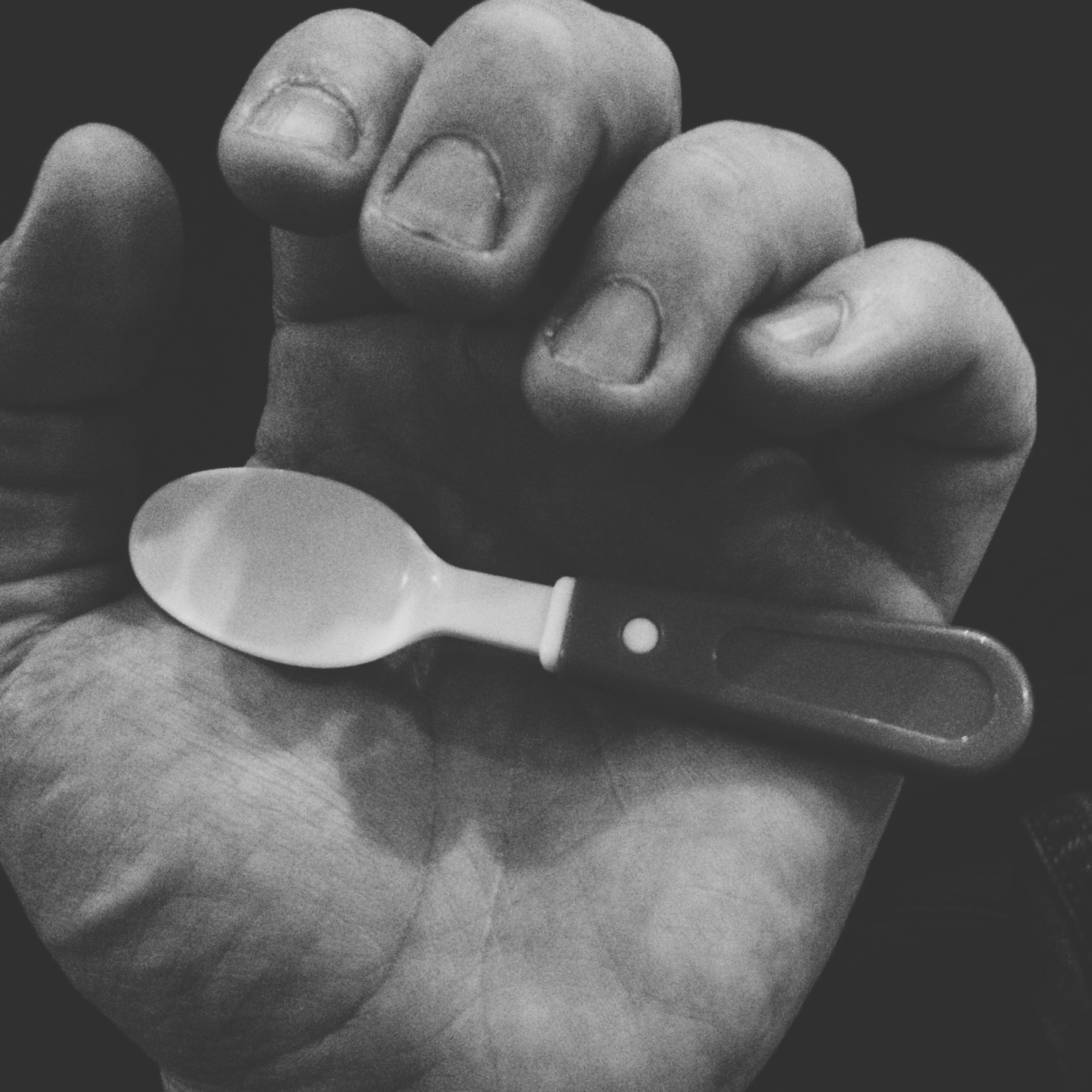
    There’s a man writing in a notebook and his hands are scarred and discolored from years of sun allergies and intentional damage, the scratching and kneading and pulling and tearing at the skin while in slumber. There are times when his hands don’t resemble his own but his father’s, or more like the memory he has of his father’s hands, so large and commanding, so devastating, a landscape of skin dominated by long, winding wrinkles and impossibly large veins that as a child, the writer thought were fat blue worms sleeping just beneath his father’s skin. The back of the writer’s hands have a spatter of light brown hairs beneath the pinkie knuckle, and this too he remembers as a characteristic of his father’s hands, a farmer’s hands, a ball player’s hands, a god’s hands. His cuticles, the writer’s, are dry and white with hardly any pale crescent lunula at the bottom, and the nails, carefully and frequently shorn so that very little white exists at the free edge beyond the fingertip, are deeply ridged in parallel vertical lines. He works with his mind but his hands are responsible for the effects of his work: elucidation, translation, illustration. The insides of his hands (the palms), are deeply seamed with wrinkles (age, use) and hard, gelatinous callouses like yellow patches at the base of each finger. It amazes him, his hand. He wonders what his hands say to others about him. There is a purpose for everything on this planet, he thinks, and thus writes. He feels that he is a failure, this man, and that he is forever damned to failure. Perhaps his hands will save him, they’ll claw their way up from the premature grave of the writer’s design, they’ll brush the clumps and grains of moist earth from his body.

  • Slumber party

    IMG_0940

    I wake thrashing in the night, bedclothes soaked through and enfouled. Something is wrong, there is an intruder in the darkness. I don’t remember having dreamed but there is fear and panic and I cannot waste time, for I must arm myself with whatever is close at hand to defend my body and defend my home and I reach for the bedside lamp to douse the room in light to find the intruder (monster) standing over me or my sleeping wife who’d never hurt anyone, not purposely, not ever, and as quickly as my mind seeks her out in the darkness it returns with impossibly horrific images of her corpse and with a flick of my hand the light snaps on and of course there is no one but the intruder of consciousness within pulling me back into dream and then I begin to remember. I look to my wife sleeping (ostensibly) peacefully and there’s a flashlight clutched tight in my hand raised to attack and I set it down gently, though the panic has not yet abated in full, for I know that the stranger lurks still in the room, it is I, the stalking assassin of my dreams.

  • At sea

    bird_lives

    I looked over at her. The breeze tossed her hair, a dark nest of serpents at dusk. She looked out to the darkening world beyond the lights of the vessel and I could see that she was in her forties but that time had been gentle with her. I was curious about her, as I knew she was curious about me, but with age comes a particular degree of respect and decorum, and neither of us would yet voice our curiosities.

    The solitude, the mystery, she said. I can’t help but hark back to a time when the sea was all there was.

    I smiled and nodded, leaning over the deck and looking down at the water again. The pitch and roar of water cascading upward towards me.

    I hope I’m not disrupting your peace, she said.

    No, I told her. It’s fine. It’s nice to hear a voice other than the voice in my head.

    I can certainly understand that, she said, and for the first time we looked each other in the face.

    How long have you been aboard? she said.

    I boarded this morning in Madrid.

    After a lengthy pause, she said, I’ve been on this ship for three months tomorrow.

    I looked at her, wondering what might have brought her out to sea for so long, what sort of personal outrage forces a woman and her family to seek refuge in the great abyss for such an extended period. Then I remembered almost immediately that the abyss calls for all of us at one point, and we all of us must answer that call.

    Have you found it particularly dangerous? I asked.

    Actually quite the opposite, she said. I’ve found these past few months, and especially the last few days among the most peaceful of my life.

    Congratulations, then, I told her. The erstwhile world is not nearly in the same condition.

    Would you be interested in a brandy? she asked me.

    I’m afraid I would, I said, smiling at her.

    You don’t strike me as someone who fears many things, she said.

    We left the deck sinking into shadow and walked down through the narrow corridors of a labyrinth to her cabin, which was not far from my own. I sat on a stool near her cot and watched as she poured brandy from a small bottle into two plastic cups. She sat on the bedding and we touched cups and drank, feeling the gentle rock and sway of the ship in the water. The brandy was good, almost as fine as something Jorge would have kept stowed in his desk drawer, but not quite, perhaps a bit too sweet. The woman’s cabin was similar to mine and everything was tidy and well kept, much like the woman herself, who looked at me through dark pools and then down to her cup, and in the soft light of the room I could at last make out the delicate contours of her face and neck, the elegant geometry and proportionality, her eyes and hair a matching depth of black, and she said to me, or perhaps to the room in general, to herself, to no one, I’ve dreamt that the world is going to end.