Category: notes

  • the shrink

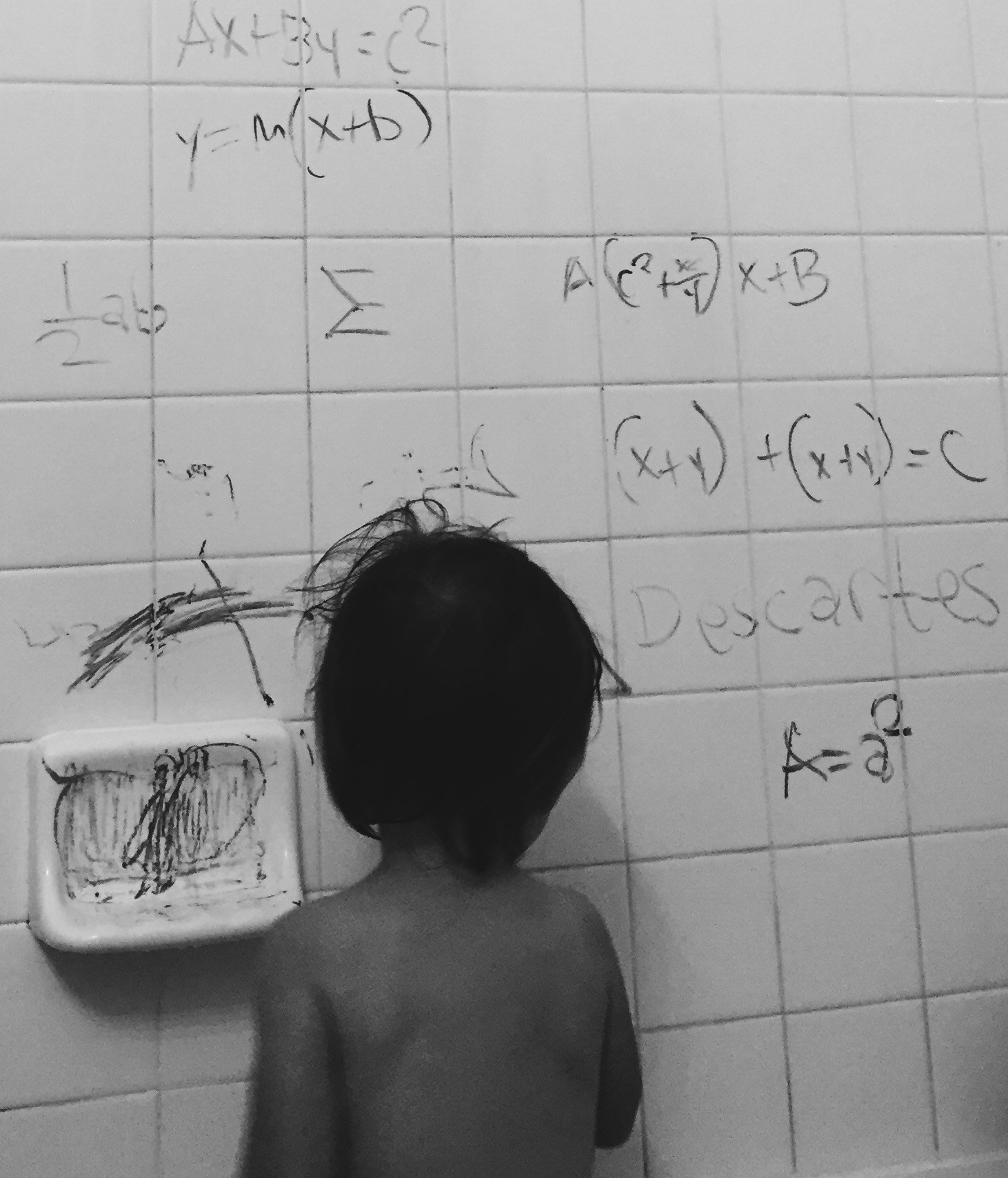
    descartes.jpg

    I sat back in the chair opposite the shrink. I didn’t want to look at him anymore. 

    How about hypnosis? he asked. 

    I averted my eyes and my mind jumped from thought to thought like a frog on a pond. 

    What about it? I asked. 

    The shrink was an older man but not old, bald up top with a neatly trimmed beard dyed brown. His eyes wandered from my face to the tablet in his lap and back to me again. I thought of paradise and tried to picture the idea in my mind. 

    Have you ever thought of hypnosis to treat some of your … symptoms? 

    His eyes were gray like his hair would have been or as his beard should have been. But one could hardly see the color of his eyes through the squinty coin slots they’d become, or perhaps always were, since his childhood in the rich neighborhoods of Manhattan or Massachusetts, back when the other kids made fun of him for his briefcase — for simply carrying it with him at all times merited their ridicule, but adding insult to injury, as they say, was the appearance of the briefcase — brown mixed with green or what the kids called puke-green, the worst of all possible colors. Making matters worse yet, the briefcase was several decades old, and thus, beat up and disastrously out of style. 

    I’m not sure about hypnosis, sir, I said. 

    Thoughts cascaded down the vined walls of my mind. The shrink’s hands were small and weak — just as one would expect. I’d have challenged him to an arm-wrestling match but I tweaked my wrist earlier that day at baseball practice. 

    I don’t believe in … histrionics, I said, proud of myself for using the word in a sentence. 

    The shrink paused with an expression of consternation.

    I don’t think that’s the proper use of the term, he said.  

    He sat back in his chair, uncrossed, then re-crossed his legs. He leaned forward again, toward me. 

    He said: Hypnosis is highly effective on younger people. 

    His lips were small and pink and his mouth barely opened when he spoke. 

    He said: Adolescents are highly susceptible to the power of suggestion. 

    I was tired of looking at him. The window behind him opened to the vast, sun-swept city.

    There’s nothing to be afraid of, he said. 

    I’ve been hypnotized before, I said proudly, shifting my weight in the seat.

    He leaned back. His clothes were bland and ugly and probably cost a lot of money. 

    Is that so? he asked. 

    I looked out the window. My friends were out there somewhere, running around aimlessly, breaking things, looking for girls. They were like me in that they did not know the world was theirs. 

    Yes, I said. My mother had me hypnotized because she thought I was lying about some money that went missing. 

    I realized I’d been wringing my hands, playing with them. The shrink stared at them as I spoke. 

    Did you take the money? he asked. 

    He looked at my face to gauge my reaction. His face was white, pale, bloodless. 

    No, I said. 

    He wrote on the tablet with a stylus. 

    I had been seeing this girl, Elaine. She was short and dark-haired with big, brown eyes. We kissed once and I reached up to touch her chest but she pushed my hands down. I thought maybe I loved her but I didn’t know for sure. I didn’t tell the shrink any of this.

    What do you want to do when you grow up? he asked. 

    Elaine’s mother was also a shrink. I questioned the character of those who chose to listen to other people’s problems for a living. I didn’t tell the shrink that I hadn’t given my future much thought. I’d probably play baseball or run my dad’s print shop when he retired. I’d marry Elaine and she’d write plays and we’d have a baby or two.

    I’ll probably fly airplanes, I said, without knowing why I said it.

    He leaned toward the small table between us and hefted a cup of steaming tea. He sipped it. 

    I didn’t know you were into aviation, he said, smacking his lips together and leaning back in the seat. 

    He wrote on his tablet. His socks had brown diamond patterns and his shoes looked new, like today was the first he’d worn them. He seemed smaller after drinking the tea, as if it had shrunk him.

    Why are you smiling? he asked. 

    I looked down to the animal-hair carpet and out the window to the city. When I looked back at him he appeared even smaller, like a large adult child. He was shrinking rapidly, deflating, losing volume, as Mr. Potter would say.

    Nothing, I said, trying and failing to hide my amusement. Nothing.

    That’s okay, he said. You don’t have to tell me. 

    The office was small but the shrink’s desk at the window was large. The wood was reddish-brown and looked heavy. 

    He cleared his throat and continued to shrink, to biologically regress. His feet no longer touched the ground; they dangled and swung over the animal carpet. His tablet was now the size of his torso. I stifled a laugh. His face reddened.

    Okay, now, he said raising his little hand with the oversized stylus.

    His voice was higher in pitch, like a child’s, or as if he’d swallowed a balloon of helium. One giant shoe fell off a foot to the animal carpet. Then I laughed — I couldn’t hold it.

    All right, that’s enough, he giggled, his voice that of a delighted toddler. The giggling rose to a crescendo of gut-laughter, uncontrollable and tiny.

    I lost it, falling onto the animal carpet, laughing, laughing.
  • A fly in the marketplace

    I have become a fly in the marketplace. I buzz and irritate my fellow men and women. Capitalism has done this to me — entrapped me in the public domain, away from my solitude. Now I fly and buzz with the others, content with a lack of desire and inspiration, poised to interact in the marketplace, consume, procreate. I spread the disease of mediocrity and uniformity as an instrument of the capitalist machine.

    From Nietzsche’s Zarathustra:

    Flee, my friend, into your solitude! I see you defeated with the noise of the great men and pricked by the strings of the little men.

    Forest and rock know well how to be silent with you. Be like the tree again, the wide-branching tree that you love — silently and attentively it hangs out over the sea.

    Where solitude ends, there the marketplace begins; and where the marketplace begins, there begins also the noise of the great actors and the buzzing of poisonous flies.

    Even the best things in the world are worthless without those who first present them. People call these presenters great men.

    The people have little comprehension of greatness, that is to say: creativeness. But they have a taste for all presenters and actors of great things.

    The world revolves around the inventors of new values; invisibly it revolves. But around the actors revolve the people and fame; so the world goes.

    The actor has spirit but little conscience of the spirit. He always believes in that with which he most powerfully produces belief — produces belief in himself!

  • teeth

    IMG_0923

    Drums rain from the sky. Is it real?

    Water flows within, disturbed. 

    Only music sets me right. 

    Who’s writing? Not me!

    The detective carries himself with dignity, poise. He is forty, “a good age,” according to Colombian writer Evelio Rosero. Nothing is real. All the inspiration gone, dried up. I worry about writing more than I write. I worry about time and missed opportunities and money — especially money, always money, and I remember an anecdote about the infamous poverty of Cormac McCarthy, who once couldn’t afford toothpaste. Luckily I can afford to clean my teeth but they clench at the thought of the author of Blood Meridian and Outer Dark penniless, suffering the pain and indignity of decaying teeth. 

  • Bolaño’s literary kitchen

    BetweenParentheses

    “In my ideal literary kitchen there lives a warrior, whom some voices (disembodied voices, voices that cast no shadow) call a writer. This warrior is always fighting. He knows that in the end, no matter what he does, he’ll be defeated. But he still roams the literary kitchen, which is built of cement, and faces his opponent without begging for mercy or granting it.”

    — Roberto Bolaño

  • Echoes of silence


    notes

    I imagined him leaning over the page by candlelight while the rest of the hospital slept, night after night, his true voice pouring from the pen in measured strokes, filling the void of sound in his throat and in that quiet building with the voices of multitudes. The cold winter months abated, new growth sprouted in the crystalline valley below Clyvesell, and Wade was there looking out the window and writing. Sun scorched the mountain relentlessly in the summers and Wade was there with his notepad, cloaked in the solitude of night, stealing sleep during the day when he could. He worked his jobs, he attended therapy sessions, events, activities when required, which was often. But he lived for the night, when the echoes of silence throughout Clyvesell could not hush his mind, his pen.

  • The writer who does not write

    He is the writer who does not write, though no one knows him by that name.

    No one knows him. He does not write.

    Perhaps he’d be known if others read him, but they don’t. He does not write.

    By not writing, he deprives himself one of his greatest tools. He is a flightless bird.

    No trace of him will remain.

  • Churchill on landlords

    IMG_4060

    Roads are made, streets are made, services are improved, electric light turns night into day, water is brought from reservoirs a hundred miles off in the mountains — all the while the landlord sits still. Every one of those improvements is affected by the labor and cost of other people and the taxpayers. To not one of these improvements does the land monopolist contribute, and yet, by every one of them the value of his land is enhanced. He renders no service to the community, he contributes nothing to the general welfare, he contributes nothing to the process from which his own enrichment is derived…The unearned increment on the land is reaped by the land monopolist in exact proportion, not to the service, but to the disservice done.

    — Winston Churchill, 1909

  • Montaigne on introspection

    fullsizeoutput_d31

    If no one reads me,

    have I wasted my time, entertaining myself for so many idle hours with such useful and agreeable thoughts? … I have no more made my book than my book has made me — a book consubstantial with its author …

    Have I wasted my time by taking stock of myself so continually, so carefully? For those who go over themselves only in their minds and occasionally in speech do not penetrate to essentials in their examination as does a man who makes that his study, his work, and his trade, who binds himself to keep an enduring account, with all his faith, with all his strength.

    Indeed, the most delightful pleasures are digested inwardly, avoid leaving any traces, and avoid the sight not only of the public but of any other person.

    — Michel de Montaigne