Category: Excerpt

  • Letter to a (non) reader

    Rink_of_light

    Dear Jennifer, I know you won’t read this, wherever you are, stuck in the muddy waters of your consciousness, if you’re alive at all. I dream of you often, I dream that you have wrinkles in your face and that you’re still in the village. I imagine you’re married, maybe for the second time. You’ve got three grown children and four grandchildren and you’re happy or at peace despite the frailty in the world around you. I imagine we converse, we’re seated in your sitting room across from one another after all these years, each of us hardly recognizable to the other. The floor is bare wood and the walls of the room are decorated with framed photos, and I say, You’ve changed.

    As have you.

    You haven’t strayed from the village.

    No, I haven’t.

    Have you thought of me?

    Every now and then.

    Do you remember our times together?

    I have a hard time.

    It was a long time ago.

    Yes it was.

    —and it would continue like that for hours, tentatively at first and then even slower, for we who no longer recognize whom we have loved quickly run out of things to say. But I know you’re not reading this, Jennifer, your eyes will not ever scan these lines. No one will read these words and that is as it should be. Perhaps Jorge will stumble upon them by accident one day or night and the idea of that is torture enough for me. Much of what’s in these notebooks is nonsense, meaninglessness, without value, word games and random emotion, detailed illustrations of the curse upon the infinitude of the private man. The more frivolous the words and ideas, the closer they originate in the most interior part of the self, the most private, intimate, secret room in the mind. Every writer has these notebooks or heaps of scraps that expose his many weaknesses as an artist but also as a man. The notebooks become a worthless catalog of futility that upon completion he avoids and wishes to destroy. He regards his notebooks with embarrassment. All of his pages and papers are full of affirmations and doubts and worthless blood oaths of nothing and everything that enter (exit) the mind of a person who writes to validate his life.

    It is a privilege to converse with you in your sitting room near your fireplace with photos of your family framed on the wall. It’s cozy here. Everyone in your family has your eyes, except your husband, of course, and maybe there’s a photo of you as a girl, the Jennifer I remember, freckles and dresses, dirty feet, the youth stripped away bare by consequences we inherited, and you’ll look at all the scars on my body and know exactly how I got them. The scar beneath the left eye now browned and hardened with age, you’d know it was a fight I had with a landlord in the Appalachians. You’d know it because I wrote it in a notebook and sent it to you. You’d know about the scar up the inside of my right forearm and the whore in Denver who cut me when I grabbed her. You’d know because I wrote and confessed. I wrote it just as it happened. But what you wouldn’t know, Jennifer, is that I cried as I wrote you—

    It’s okay.

    No, it was wrong of me. I am a bad person. I have done terrible things. I have killed and harmed and still I write with you in mind if only from a smoky vantage. Though you’ll never read the words. Of course you have a husband, your second, and he constructs things, he’s a carpenter or an architect, a practical man who knows the world needs more builders. You try to help your community through its unbearable winters and flawless crepuscular moments and you worship in some crystallized place of quietude. It seems so foreign and forgotten to me. You and I sit across from one another in your sitting room with coffee cooling in mugs in our hands and we talk about the affairs of the world or maybe we don’t. We realize almost immediately how far apart we have grown, how different we are. It seems we never knew each other. I am suddenly incredulous, stupefied. My memory is fractured and incomplete and I might not have known you at all but invented you through the years as a way to protect myself, to dissociate from the danger and chaos around me. I invented the village in the Tetons, I invented my adoptive parents, I fabricated those discussions with you on the hill at sunset. All of it, a dream, a lie to myself. I cannot distinguish real memories from those I’ve invented, so elusive my past and identity are. Maybe Jorge is the true Jennifer, he’s the real intended recipient of these notebooks, and even he just a complex invention or delusion.

    I won’t offend your sense of decorum, Jennifer, I won’t mention the brutality I’ve witnessed, the catalogue of failed moral judgments, because I am not a perfect man. You’d know this because I wrote to you, I wrote it all down for you with blood and dirt in the cracks of my hands. I told you everything; I held nothing back. In this sense you know me better than I know myself, you know my secrets and delusions and I know nothing about you. I am wide open beneath the cold blade of your scrutiny, sentenced to a panopticon of my own design.

    Maybe you should leave.

    Of course.

    Please.

    Is it because I stopped writing to you? Because I stopped sending the notebooks?

    I’ll scream.

    —and I deserve your screams, Jennifer. Howl and scream and remind me that you’re alive, that I’m not inventing this. I should not have stopped sending my notebooks. I should have always kept you close, always just a pen stroke away. I can reach out across the light and touch you. You’re so cold. What happens when we go, Jennifer? What happens when the eyes cease to glitter and our minds race dreamless into oblivion? What happens when there are none of us left to roam this place and drain its resources? What happens when our languages hush with us? Thunder echoes in fragmented mosaic and the human cadence is weak in response. Could our direct forebears have known they were living in the penultimate age?

    Some of us are so convinced of our fate. What happens when our wells dry up, when the world is finally free of the human stain? We can’t all of us be certain of the fate of the human species, Jennifer. Or better — we can’t all of us live to see the truth (or untruth) of our respective beliefs. What happens to the planet then? There will be wind and seasons and there will be the Earth’s only true enlightened creature, the sea, for the sea is not ever surprised despite its eternal metamorphosis. The sea, though it always changes, remains forever unchanged—

  • on Nietzsche

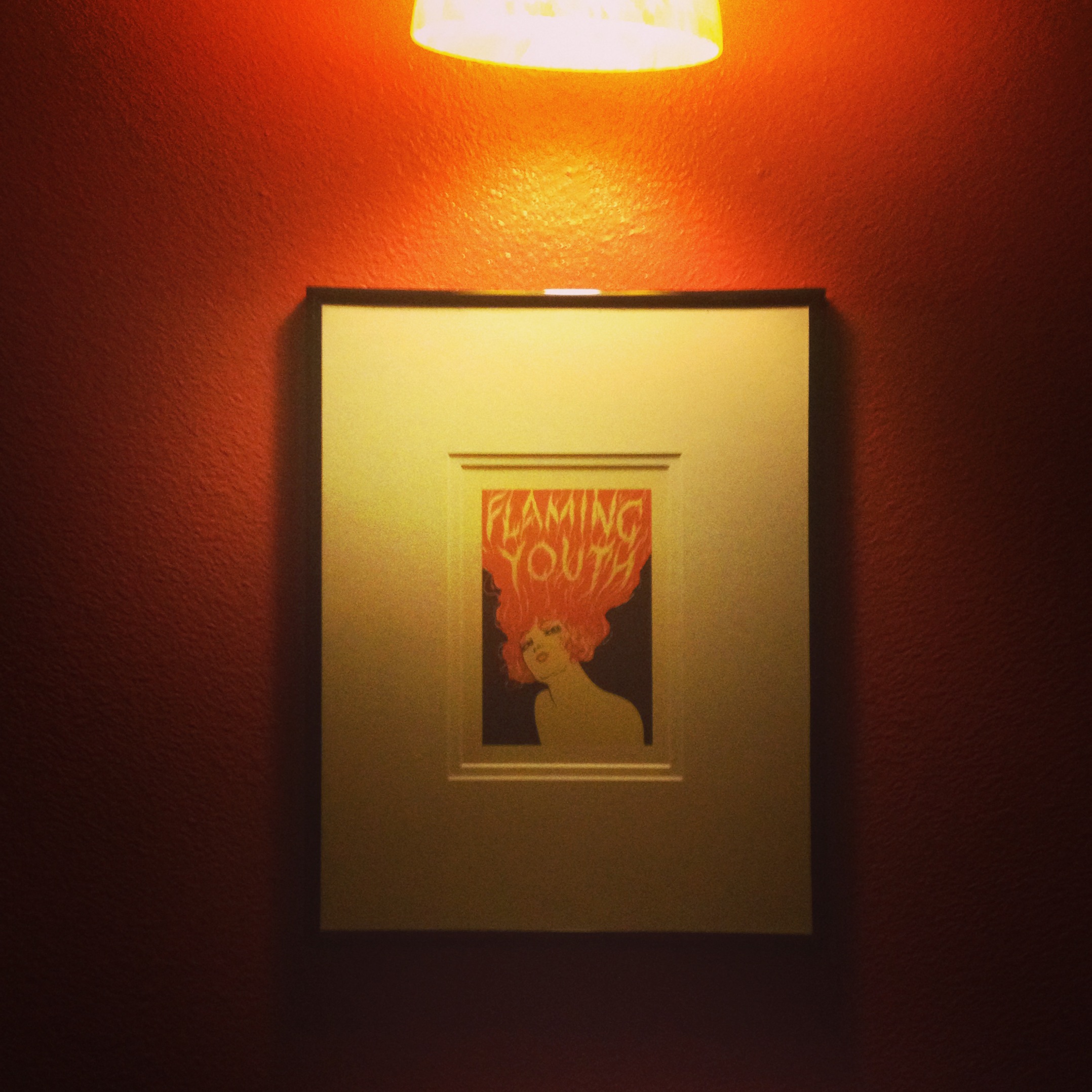
    Flaming youth

    …Nietzsche wished to make a rule of the exception. The higher self becomes the measuring stick against which human life is evaluated. To realize his potential, man must struggle such that his higher self may rule. One seeks, in other words, to extend the time one lives in a state of inspiration…The feeling of inspiration, of a heightened sense of power, is attainable only when the soul rises above itself…Whoever demands greatness from himself is subject to unending inner struggle…

    Leslie Paul Thiele, Nietzsche and the Politics of the Soul

  • Letter to a reader

    IMG_1521

    Today I received a letter from a reader in Canada, asking if I’d ever read The Book of God. My news stories were lopsided, the reader wrote, and it seemed as if I’d never actually read the sacred text. I was a traditionalist sympathizer, or worse, a secret secularist, working for the other side.

    My intent has always been to make it clear that I work for no side. Yes, I am employed by the New Collective, which maintains unique autonomy in the global environment of information control. They offer meager pay but protection and the freedom to write as I wish. The words that readers see in the New Collective have been reviewed and reshaped (and often heavily chopped) by gatekeepers and editors who fashion the original message into something new, approved for readers, aligned with the New Collective’s editorial mission.

    I usually ignore the few letters I receive from readers and discard them without a thought. But when I do occasionally read one I’m not pleased with what I’ve read and it’s ultimately a waste of time because most readers have no energy or passion in their thoughts, there is no love or power or presence. I’m not upset when readers are critical of my work; I will always defend healthy criticism and discussion. The problem is that the letters are sabotaged by poor organization, sluggish prose, wildly inconsistent grammar, and puerile use of language in what basically amounts to a list of avid personal attacks. Most messages are critical in all the wrong ways, ultimately empty, useless, a waste of time.

    But as this particular letter arrived from Canada, a home of mine for many years after having fled my childhood village, I read it and chose to respond. This is what I answered privately:

    Dear reader, the first time I read The Book of God I didn’t understand it. I tried. It took two days of reading and rereading, and my first reaction was that it was incomplete. An adaptation of god’s words spoken through man, or so they say, the chosen son: an unknown and unauthenticated person of male or female gender writing from somewhere inside former Argentina. Sexless, they say. I read it after leaving the courier’s guild of North America to begin working for the New Collective. I remember hearing the story about this sexless child who could heal the sick and summon rain during drought. A demigod who could redirect streams of water to where it was needed and sate the hunger of its admirers when resources were hopelessly low. All of this according to legend, and all unauthenticated. Of course I never had the fortune of meeting this person (to date no one claiming to have met the child has been validated), but the stories I encountered pushed me toward the child so that I found myself at the New Collective, chasing leads across the world, a mercenary in the dialogue of ideas. If you’re still reading this.

    I am no religious scholar and do not pretend to be. The first time I read The Book of God it seemed to me like any other holy text, though, as I wrote — incomplete. All the traditional elements were in place: stern and merciless (but absent) authority, promises of redemption or punishment, engaging narrative, eschaton. I’ve read it three times, and don’t believe there will be a fourth. My current critical opinion of the text mostly mimics my first impressions of it. Perhaps if more of the text survived, a meaning would emerge for me (for you know as well as I that the “book” is incomplete).

    I can understand how some interpret the text as a salvo to rejuvenate a spiritually complacent human race. Perhaps there’s something to that. Religion has failed, they say. Man’s spiritual role in the universe has evolved. For that reason alone I gave your holy text a chance, dear reader. I read it carefully, three times, and it is only after careful thought that I believe the book to be an interesting historical artifact but logically unsound. I also believe the text to have been grossly misinterpreted by those who espouse it.

    The world has changed as it always changes. The human experience is a unique emotional phenomenon and people create a framework (or multiple, overlapping frameworks) in which to best interpret and understand it. The Book of God is one of those frameworks. Another is the anonymously penned The Enlightenment Project, the champion of man as the ideal spiritual guide. Or so they say. As I stated before, I am no religious scholar, but isn’t The Enlightenment Project critical of religion, and don’t those who use the Project as a social tool understand the terrible irony in their abuses against worshippers? These questions are further reasons why I believe The Enlightenment Project to have also been dreadfully misinterpreted.

    Unfortunately the authors in question are not present in the public forum to comment on the interpretations of their respective works. And so the readers and interpreters interpret and read at will, which is perhaps as it should be.

    I signed the letter and delivered it to a courier from the European guild. Then I left to investigate and write another assignment.

  • Excerpt: time machine

    IMG_0061

    In the dream I leaned over a workspace surrounded by bolts and plastic casings and wires, writing and rewriting the user manual for the time machine as I built it. Every part or piece of the machine had a precise function and I used common household items like cloth and a plunger, I whittled hundreds of tiny working gears out of wood and I didn’t sleep for five days. When I was finished the machine stood just over three feet tall and four feet wide and I stood there in my workspace, staring at it. There were parts and wires and fragments of my life strewn everywhere and I pressed a button to set the machine into motion. It vibrated to life in cascades of light and sound and the scent of almonds and I knew it would work, it was inevitable. Then I took a sledgehammer and smashed the machine to pieces.

    In the dream I fell asleep upon the broken machine and dreamed again of time travel. In the dream’s dream I fashioned a drug rather than a machine for traveling forward and backward through time, a chemical compound of basic household ingredients in precise measurements, a subatomic cocktail in one compressed pill, and all one had to do to visit the Sixth Dynasty in Egypt was swallow that pill, all one had to do to help fight the imperialist invaders in the great galactic war of 3016 was snort a quick line, and when I woke from both dreams in simultaneity it was dark in my apartment and I didn’t know where I was until I looked out the window to the familiar lights of New York City across the bridge.

  • Apollo/Dionysus

    Gemini

    Man now expresses himself through song and dance as the member of a higher community; he has forgotten how to walk, how to speak, and is on the brink of taking wing as he dances. Each of his gestures betokens enchantment; through him sounds a supernatural power, the same power that makes the animals speak and the earth render up milk and honey. He feels himself to be godlike and strides with the same elation and ecstasy as the gods he has seen in his dreams. No longer the artist, he has himself become a work of art. – Nietzsche

  • Deconstructionist, pt. III

    Trane2

    A memory plagued with holes rendered my creative apparatus impotent, and I retired within the year. It was by far the most difficult decision I’ve made. My colleagues provided support at a respectful distance as I pondered the end of a career, the end of a lifetime of designing and constructing. All I’d ever known was that I was alive and I was a builder. But that foundation was now gone, forcing me to discover something else, to be something else.

    Brain damage due to seizures cast the world into a pall both surreal and morose. I maintained my office much as if working normally. It gave me an objective each day and held me close to the creative process. I observed my peers and encouraged them as I continued to lose clarity and understanding. At night idleness assailed me and I wandered the rooms of my home looking for anything of interest, picking books from shelves and walking about with them, reading aloud. I chose not to sleep but rather use my waking time searching those winter months for a new reason to live.

  • an excerpt from Esperanza’s story

    Esperanza paddled her way across the limitless expanse, her arms tired to the bone or past the bone to a place unnamed but doubtless real. Reflected in her eyes a sun red as fire began to wink out below the distant horizon of the sea and the girl wondered if she weren’t upon the waters of an alien world. Having been in the watercraft for so many days, she wondered if her legs would carry her when she finally arrived at land. Wind reached her from a distant place, carrying with it air chilled and fragrant with moist earth. She was getting close. 

    And from the silence into her awareness with sonic command, an unanticipated explosion of light and sound, the two ghastly creatures from the woods skimmed atop the water from afar directly toward her, incredibly fast. As they approached she failed to see their faces shrouded deep within their hoods. 

    We warned you once, one of them said in a high-pitched voice. 

    The creature lifted its bony arms into the darkening gradient and two balls of white light swelled and shot toward Esperanza, upending her raft and tossing her into the water. She had difficulty orienting herself in the water, cold and dark as it was. When she resurfaced the creatures hovered above her. Long bony fingers like twigs wrapped around her head and plucked her from the water, sending her airborne, floating through the air, a spaceward missile tumbling headlong back the way she’d paddled, thinking it was much colder up here, twenty meters above the water, and how serene it all seemed from this high up, how clear the moon was, ashen and pure and silent, how peaceful. 

    When she slammed back into the water all the air in her lungs evacuated from the shock of impact and her body somersaulted downward, downward at the mercy of the sea, the water dark and immense and silent, our friend a sleeping ballerina in perhaps her final solo performance…

  • Cells

    Libros

    Wade ponders the pivotal moments in his life, the decisions he’s made and how his experience would be different had he chosen another option. He writes about what might have happened had he not come to the end of the alley that night at the theatre, what might have happened to him had he not followed the green-eyed girl into the city wild with dawn. The papers are filthy and black from his hands and clothes and he sits with his back to the warm noontime brick writing that he’d probably still be on the streets or in jail, running and hiding until starved, faceless and nameless. Maybe he’d get sick or overdose or a crazed junkie would open him up with a blade, spilling his cells into the gutter. Maybe the cops would kill him, gun him down on purpose or beat him a little too much by mistake. And if they didn’t kill him they’d release him cold and broke to some other place where he’d try to establish himself, get a job and some clean clothes, trying desperately to evade everyone with their stares and whispers but above all the cops, living in a cell in his mind, only to be arrested for trespass or some misdemeanor and thrown into another (physical) cell.

    He thinks about the moments that brought him to this place, writing them in reverse order with his cheap ballpoint, the ink black as his cuticles. He has not written about what might have happened had he remained in his childhood home because quite simply he hasn’t thought about it. Staying there wasn’t an option; some of his earliest memories are of formulating escape plans. Wade’s psychological state is such that to revisit that terror from long ago is to unleash its wrath in full upon the entire emotional apparatus.