Category: Bolaño

  • Sun and Skull, by Roberto Bolaño

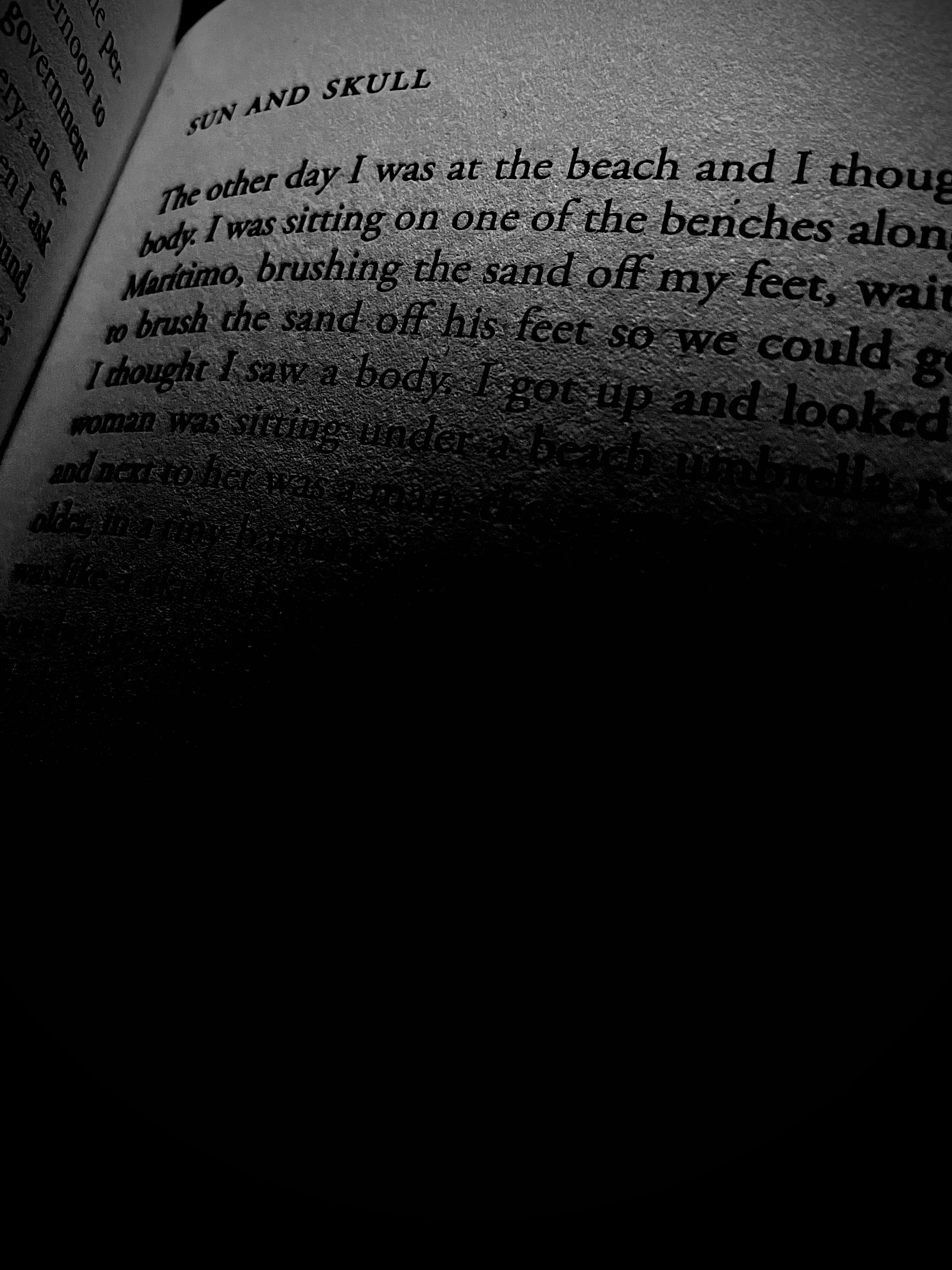
    The other day I was at the beach and I thought I saw a dead body. I was sitting on one of the benches along Blanes’ Paseo Marítimo, brushing the sand off my feet, waiting for my son to brush the sand off his feet so we could go home, when I thought I saw a dead body. I got up and looked again: an old woman was sitting under a beach umbrella reading a book and next to her was a man, the same age or maybe a few years older, in a tiny bathing suit, lying in the sun. This man’s head was like a skull. I saw him and I said to myself that he would soon be dead. And I realized that his old wife, reading peacefully, knew it too. She was sitting in a beach chair with a blue canvas back. A small but comfortable chair. He was stretched out on the sand, only his head in the shade. On his face I thought I glimpsed a frown of contentment, or maybe he was just sleeping while his wife read. He was very tan. Skeletal but tan. They were tourists from up north. Possibly German or English. Maybe Dutch or Belgian. It doesn’t really matter. As the seconds went by, his face looked more and more skull-like. And only then did I realize how eagerly, how recklessly, he was exposing himself to the sun. He wasn’t using sunscreen. And he knew he was dying and he was lying in the sun on purpose like a person saying goodbye to someone very dear. The old tourist was bidding farewell to the sun and to his own body and to his old wife sitting beside him. It was a sight to see, something to admire. It wasn’t a dead body lying there on the sand, but a man. And what courage, what gallantry.

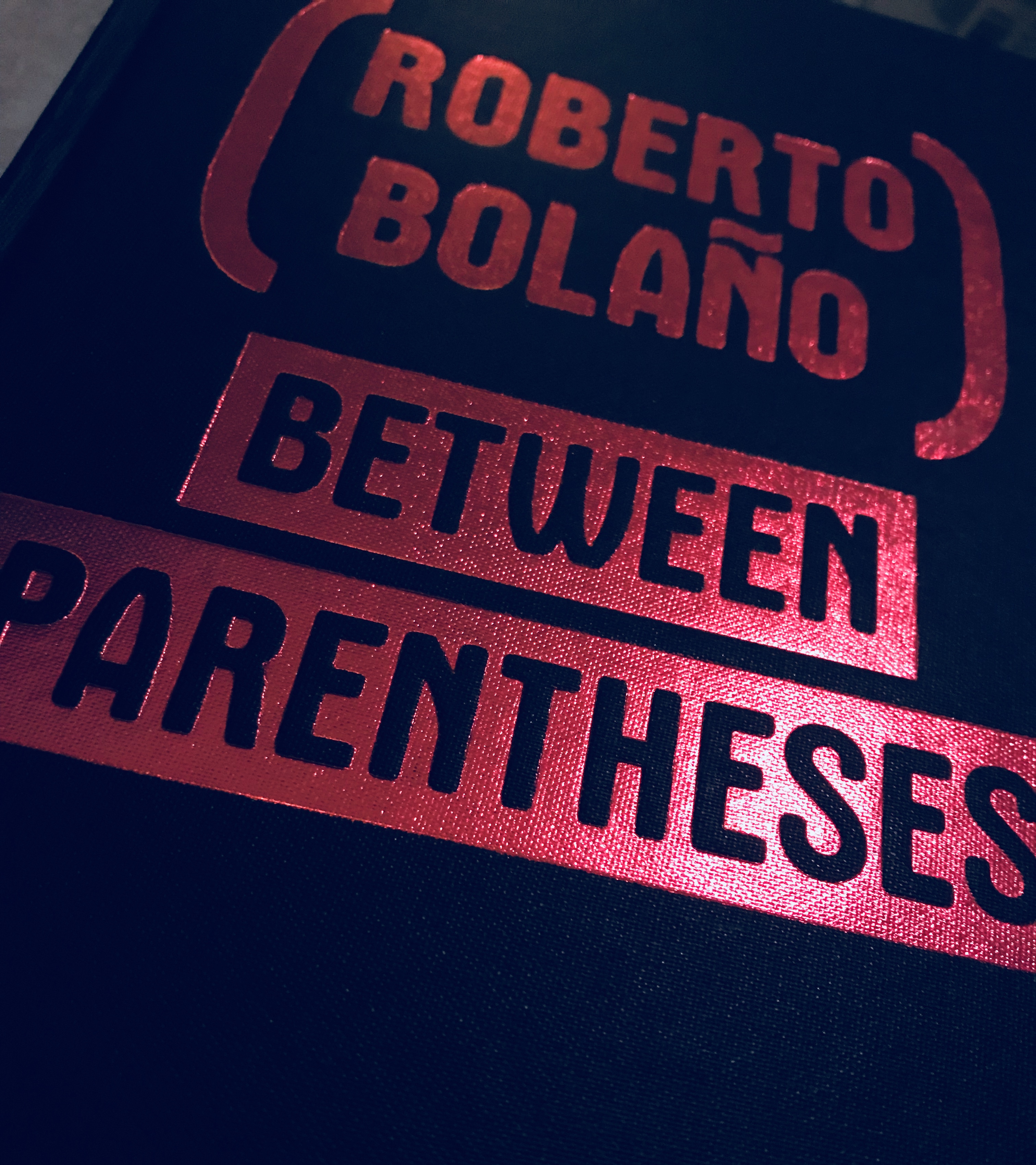
    Bolaño, Roberto, Between Parentheses: Essays, Articles, and Speeches, 1998—2003. Trans by Natasha Wimmer. New Directions Books, New York, 2011: 157.
  • Bolaño on working writers

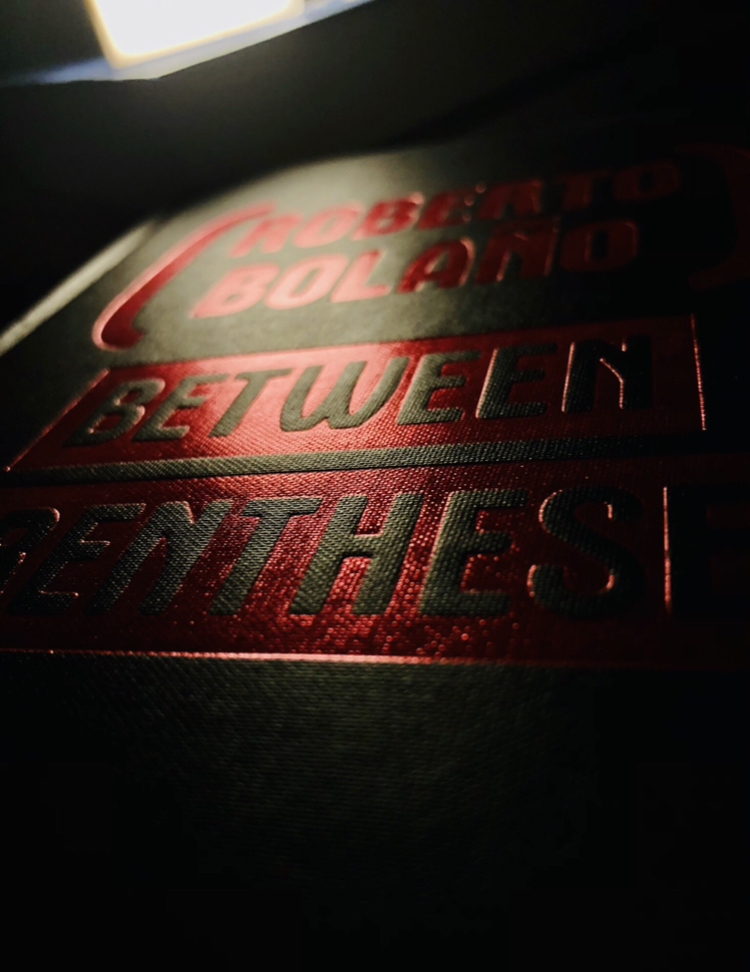
    No one forces you to write. The writer enters the labyrinth voluntarily—for many reasons, of course: because he doesn’t want to die, because he wants to be loved, etc.—but he isn’t forced into it. He’s no more forced than a politician is forced into politics or a lawyer is forced into law school. The great advantage for the writer is that the lawyer or the politician, outside his country of origin, tends to flounder like a fish out of water, at least for a while—whereas a writer outside his native country seems to grow wings. The same thing applies to other situations. What does a politician do in prison? What does a lawyer do in the hospital? Anything but work. What, on the other hand, does a writer do in prison or in the hospital? He works. Sometimes he works a lot (not to mention poets). Of course the claim can be made that in prison the libraries are no good and that in hospitals there often are no libraries. It can be argued that in most cases exile means the loss of the writer’s books, among other material losses, and in some cases even the loss of his papers, his unfinished manuscripts, projects, letters. It doesn’t matter. Better to lose manuscripts than lose your life. The point is that the writer works wherever he is, even while he sleeps, which isn’t true of those in other professions. Actors, it can be said, are always working, but it isn’t the same: the writer writes and is conscious of writing, whereas the actor, under great duress, only howls. Policemen are always policemen, but that isn’t the same either, because it’s one thing to be and another to work. The writer is and works in any situation. The policeman only is. And the same is true of the professional assassin, the soldier, the banker. Whores, perhaps, come closest in the exercise of their profession to the practice of literature.

    Bolaño, Roberto. Between Parentheses: Essays, Articles, and Speeches, 1998–2003. Translated by Natasha Wimmer, New Directions Books, 2011: 57.

  • Third novel out to alphas

    My third novel is out to alpha readers (many thanks to them). It took four years and four months to research and write with a 19-month hiatus in the middle. That’s nearly double the time it took to write the others. I’m grateful to all the places I sat writing in the notebook, usually at a bar or bookshop somewhere in the city (before COVID-19). I’m especially grateful to the following people for their inspiration: Ricardo Piglia (specifically Target in the Night), Esperanza Marie, Esther Vigil, Chris Dire, Roberto Bolaño (specifically The Unknown University), Chris Ransick, The Ancient Mariner, and the town of Salida, Colorado.

  • Library, by Roberto Bolaño

    Wreckage

    Books I buy

    Between the strange rains

    And heat

    Of 1992

    Which I’ve already read

    Or will never read

    Books for my son to read

    Lautaro’s library

    Which will need to resist

    Other rains

    And other scorching heats

    — Therefore, the edict is this:

    Resist, my dear books, 

    Cross thy days like medieval knights

    And care for my son

    In the years to come


    (From Two Poems For Lautaro Bolaño)

  • Bolaño’s literary kitchen

    BetweenParentheses

    “In my ideal literary kitchen there lives a warrior, whom some voices (disembodied voices, voices that cast no shadow) call a writer. This warrior is always fighting. He knows that in the end, no matter what he does, he’ll be defeated. But he still roams the literary kitchen, which is built of cement, and faces his opponent without begging for mercy or granting it.”

    — Roberto Bolaño